




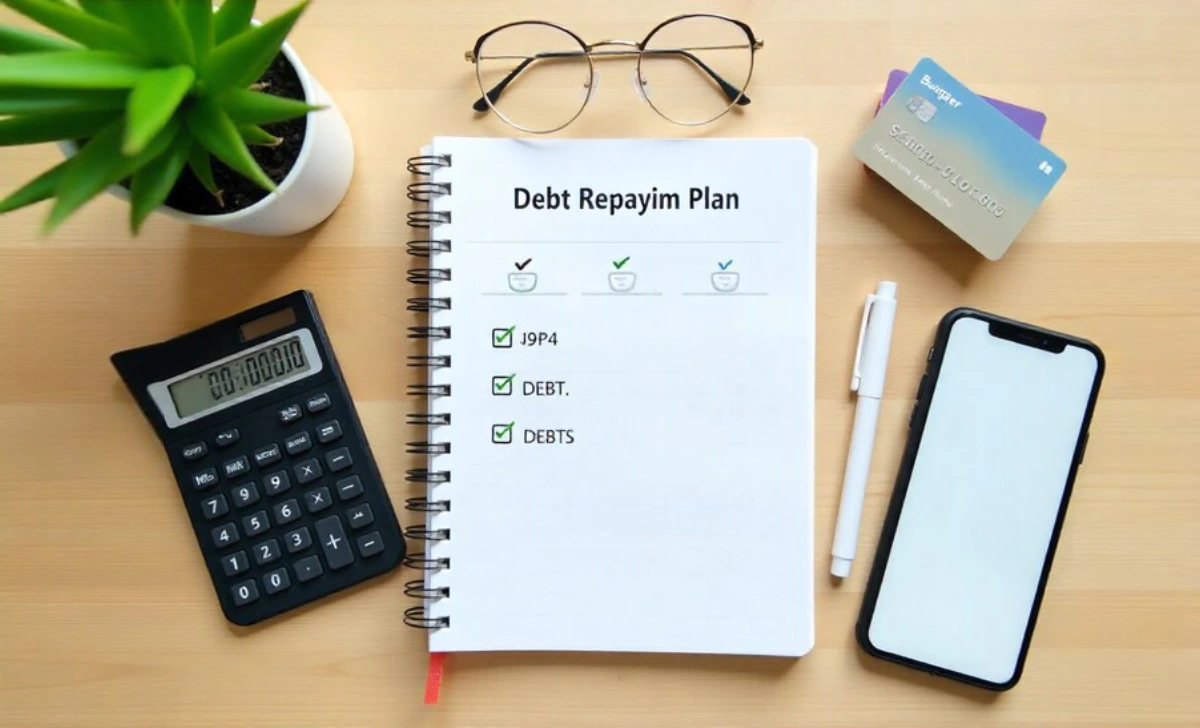
A debt repayment strategy is your personalized roadmap to eliminate debt systematically while maintaining financial stability. The most effective approaches combine either the avalanche method (paying off high-interest debt first to save money) or the snowball method (tackling smallest balances first for quick wins) with a realistic budget that covers essential expenses. Your strategy should include listing all debts with interest rates, choosing a repayment method that matches your personality, automating payments to stay consistent, and redirecting any extra income toward debt elimination.
Success requires more than just picking a method. You need to stop accumulating new debt, build a small emergency buffer of $500 to $1,000, and track your progress monthly. Most people who follow a structured debt repayment strategy eliminate their consumer debt within 18 to 36 months, depending on their income and total debt load. The key is starting with a clear plan and adjusting as your financial situation changes.
You open your credit card statement and feel your stomach drop. The balance hasn’t budged despite making payments every month. You’re not alone. Recent data shows that American households carry an average of $7,951 in credit card debt, with total consumer debt exceeding $17 trillion in 2024.
Debt feels overwhelming because most people lack a clear strategy. They make minimum payments, hope for the best, and watch interest charges pile up year after year. This cycle keeps you stuck, stressed, and unable to build wealth or pursue financial goals.
This guide will walk you through a proven debt repayment strategy that works for real people with real budgets. You’ll learn exactly how to prioritize your debts, choose the right method for your situation, and create a timeline for becoming debt-free. Whether you owe $5,000 or $50,000, these steps will help you take control and make measurable progress.
Why Your Debt Repayment Strategy Matters Now
Every month you carry debt costs you money in interest charges. Credit cards typically charge 18% to 24% APR, which means a $10,000 balance costs you roughly $1,800 to $2,400 per year just in interest. That’s money that could fund your emergency savings, retirement contributions, or down payment on a home.
Beyond the financial cost, debt creates constant stress. Studies from the American Psychological Association show that 72% of Americans feel stressed about money at least some of the time, with debt being the primary source. This stress affects your sleep, relationships, work performance, and overall health.
The longer you wait to implement a debt repayment strategy, the more you’ll pay overall. A $15,000 credit card balance at 20% APR will take 14 years to pay off making only minimum payments, and you’ll pay over $18,000 in interest alone. With a structured strategy, you could eliminate that same debt in two to three years and save thousands.
List Every Debt You Owe
Start by creating a complete inventory of your debts. You can’t build an effective debt repayment strategy without knowing exactly what you’re dealing with.
Open a spreadsheet or notebook and list each debt with these details:
- Creditor name
- Current balance
- Interest rate (APR)
- Minimum monthly payment
- Payment due date
Include everything: credit cards, personal loans, student loans, car loans, medical bills, and money owed to family or friends. Don’t leave anything out, even if it feels embarrassing or overwhelming.
Once you have your list, calculate two numbers. First, add up all your minimum monthly payments. This is the absolute minimum you must pay to avoid late fees and credit damage. Second, total all your balances to see your complete debt picture.
Mark, a 38-year-old accountant, discovered he had $43,000 in debt spread across six credit cards, two personal loans, and a car payment. Seeing everything in one place was scary, but it gave him the clarity he needed to take action. Within three years, he paid off every penny using the strategy outlined in this guide.
Choose Your Debt Repayment Method
Two methods dominate debt repayment strategies, and both work. Your personality and financial situation determine which one fits you best.
The Avalanche Method Saves You Money
This approach targets your highest interest rate debt first while making minimum payments on everything else. Once you eliminate the highest rate debt, you move to the next highest, creating an “avalanche” effect.
You save the most money with this method because you’re attacking the debts that cost you the most each month. Someone with $30,000 in debt could save $2,000 to $5,000 in interest by using the avalanche method instead of paying debts randomly.
The downside? It takes longer to see your first debt disappear if your highest interest debt also has a large balance. This requires patience and discipline.
The Snowball Method Builds Momentum
With the snowball method, you pay off your smallest balance first, regardless of interest rate. After eliminating that debt, you roll that payment into the next smallest balance, creating a “snowball” that grows as you knock out each debt.
This method works because of psychology. Paying off that first debt feels amazing, and that victory motivates you to keep going. Research from the Harvard Business Review found that people who used the snowball method were more likely to eliminate all their debts compared to those who focused on interest rates alone.
You’ll pay slightly more in interest over time, but if quick wins keep you motivated and on track, the extra cost is worth it.
Pick the Method That Matches You
Are you motivated by logic and numbers? Choose the avalanche method and celebrate the interest you’re saving. Do you need emotional wins to stay committed? Go with the snowball method and celebrate each debt you eliminate.
There’s no wrong choice here. The best debt repayment strategy is the one you’ll actually stick with for the long haul.
Build Your Monthly Debt Payment Budget
Your debt repayment strategy only works if you have money to put toward it each month. This requires an honest look at your income and expenses.
Start with your monthly take-home pay (after taxes). Then list your essential expenses: rent or mortgage, utilities, groceries, insurance, transportation, and minimum debt payments. Subtract these from your income to find your discretionary income.
Your goal is to redirect as much discretionary income as possible toward debt repayment. Look for areas to cut temporarily: streaming services, eating out, subscription boxes, gym memberships you don’t use, or premium cable packages.
Even small cuts add up. Reducing your food budget by $200 per month and eliminating $100 in subscriptions gives you an extra $300 monthly for debt repayment. Over two years, that’s $7,200 directly attacking your debt.
Create a line item in your budget specifically for extra debt payments beyond minimums. Treat this like a bill you must pay, not optional money you’ll use “if there’s anything left over.” There’s never anything left over when you approach it that way.
Automate Your Payments and Extra Contributions
Set up automatic payments for all minimum payments. This protects your credit score and eliminates the risk of forgetting a payment.
For your target debt (the one you’re focusing extra money on), schedule an additional automatic payment each month. If you’re putting an extra $500 toward debt, set up an automatic transfer of $500 to that credit card or loan on the same day you get paid.
Automation removes willpower from the equation. You don’t have to decide each month whether to pay extra on debt or spend that money elsewhere. The decision is already made, and the money moves automatically.
When you get a raise, tax refund, work bonus, or any unexpected income, immediately put at least 50% toward your target debt. Send that payment the same day before you have time to spend it elsewhere.
Stop Creating New Debt
Your debt repayment strategy will fail if you keep adding new debt while trying to pay off old debt. This is like bailing water out of a boat while someone else drills new holes in the bottom.
Remove temptation by taking credit cards out of your wallet. Freeze them in a block of ice, cut them up, or lock them in a safe. You’re not closing the accounts (which can hurt your credit score), just making them harder to use impulsively.
Switch to cash or debit for daily expenses. Research shows people spend 12% to 18% less when using cash instead of credit cards because the psychological pain of handing over physical money is greater.
If you must keep one card for emergencies or subscriptions, choose your lowest limit card and leave it at home. True emergencies are rare. Most “emergency” purchases are actually wants disguised as needs.
Create a 48-hour rule for any non-essential purchase over $50. Write down what you want to buy and wait two days. Most impulse purchases lose their appeal when you give yourself time to think rationally.
Handle Unexpected Expenses Without Derailing Progress
Life happens while you’re paying off debt. Cars break down, kids need emergency dental work, and appliances die at the worst possible time.
Before you aggressively attack debt, save a small emergency buffer of $500 to $1,000. This isn’t your full emergency fund (you’ll build that after eliminating high-interest debt), but it’s enough to handle minor emergencies without reaching for a credit card.
Keep this money in a separate savings account that’s not linked to your checking account. Make it slightly inconvenient to access so you only use it for true emergencies.
If you do need to use your emergency buffer, pause extra debt payments for one or two months to replenish it, then resume your debt repayment strategy. This temporary pause prevents you from taking on new debt, which would set you back further.
Track Your Progress and Celebrate Milestones
Check your debt balances every month on the same day. Watch your total debt number decrease and your net worth increase. This monthly check-in keeps you motivated and helps you spot any errors or fraudulent charges quickly.
Create a visual tracker: a thermometer showing your progress, a chain of paper links you remove as you pay off each $1,000, or a graph showing your declining debt. Physical visual reminders work better than spreadsheets alone for most people.
Celebrate milestones without spending money. When you pay off a credit card, enjoy a free activity you love: hiking, a movie night at home, cooking a special meal with groceries you already have. The celebration reinforces the behavior and keeps you motivated.
Share your progress with someone supportive. Tell a friend or family member about each debt you eliminate. Their encouragement adds accountability and makes the journey less isolating.
Common Mistakes That Slow Your Progress
Paying debts randomly without a system. Spreading extra money across multiple debts feels productive but slows your progress. Focus intensity on one debt at a time while maintaining minimums on others. You’ll eliminate individual debts faster and build momentum.
Ignoring smaller debts to focus only on large ones. Even if you’re using the avalanche method, don’t completely ignore small debts that you could eliminate quickly. Sometimes paying off a $300 medical bill gives you an emotional boost that keeps you going when tackling your $15,000 credit card feels endless.
Stopping debt payments to save an emergency fund. Build your $500 to $1,000 emergency buffer first, then attack high-interest debt aggressively. Don’t pause debt repayment to save a full six-month emergency fund while paying 20% interest on credit cards. Eliminate high-interest debt first, then build your complete emergency fund.
Not adjusting your strategy when life changes. Got a raise? Increase your monthly debt payment immediately. Lost income? Recalculate your budget and adjust expectations rather than abandoning your strategy completely. Your debt repayment strategy should flex with your circumstances.
Beating yourself up over setbacks. You’ll have bad months. You might use a credit card for an unexpected expense or miss putting extra money toward debt. One setback doesn’t ruin your entire strategy. Acknowledge it, adjust if needed, and keep moving forward.