





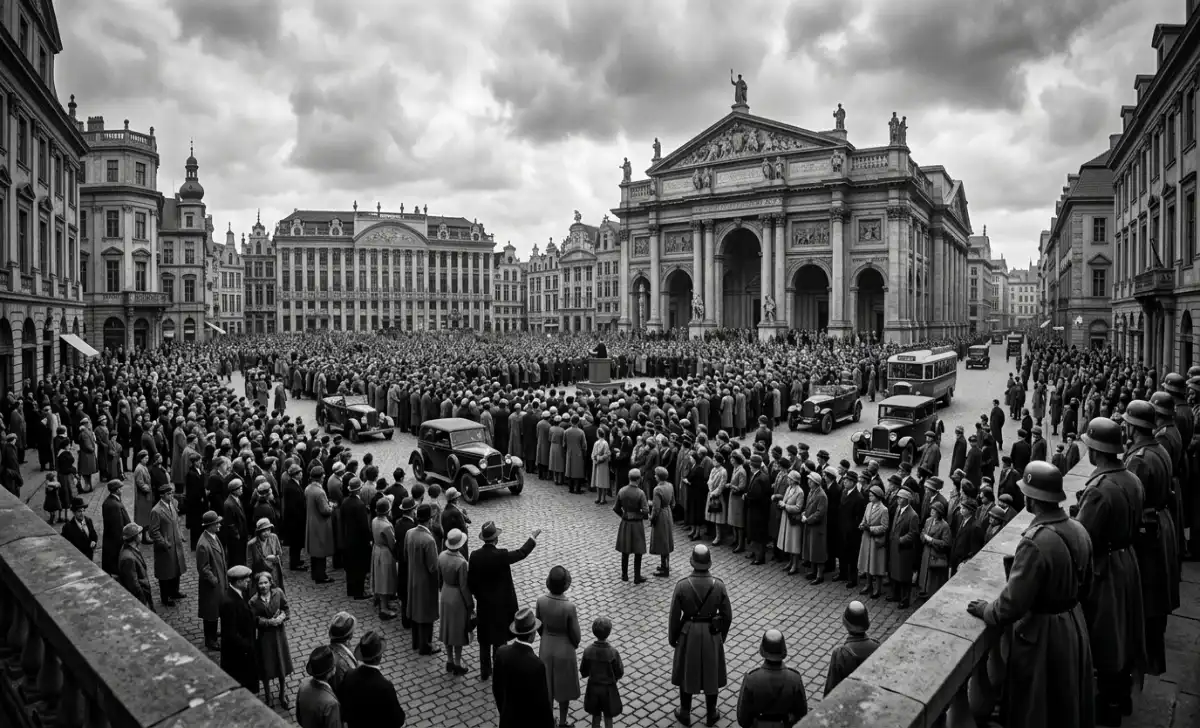
I’ve spent time reading about this topic over the years, and one thing keeps standing out: fascisterne isn’t just a dusty historical label. It still carries real weight—especially when you start connecting the dots between what happened a century ago and the unease many of us feel watching politics today.
In Danish and Norwegian, fascisterne simply means “the fascists”—people who support or follow fascism. Let’s walk through what that actually looked like in practice, why it took hold, and why it still matters.
What Does Fascisterne Mean?
At its core, fascism is an authoritarian political ideology that puts the nation—or an idealized version of it—above everything else. Individuals exist to serve the state, not the other way around. Fascisterne are the people, groups, or movements that embrace this worldview: strong centralized power under a single leader, extreme nationalism, suppression of any real opposition, and tight control over media, culture, and public life.
It isn’t simply “being conservative” or “liking strong leadership.” The classic version rejected both liberal democracy and communism. It glorified action, hierarchy, militarism, and often a mythic past where the nation was supposedly pure and powerful.
If you’ve ever wondered how ordinary people ended up cheering for regimes that crushed dissent, this is where it starts—promises of unity and strength during chaotic, frightening times. People weren’t evil. They were scared, angry, and looking for someone who claimed to have all the answers.
Core traits of fascisterne include:
- Strong nationalist beliefs
- Centralized authority under one leader
- Suppression of political opposition
- Control over media and public conversation
- Emphasis on unity and discipline above individual rights
The Historical Roots of Fascism
Fascism didn’t appear overnight. Its modern form took shape in Italy right after World War I, when much of Europe was dealing with economic collapse and political chaos. A lot of people had lost faith in democracy and started craving a stronger, more decisive leader.
Benito Mussolini coined the term fascismo from the old Roman fasces—a bundle of rods symbolizing strength through unity. He founded the National Fascist Party in 1919, promising to restore order and national pride after years of instability, strikes, and fear of communism. By 1922, he had marched on Rome and taken power. Italy became the first real fascist state.
What followed was a mix of propaganda, public works projects that impressed some observers, and the gradual elimination of political rivals, free press, and independent unions.
Germany took it even further. Adolf Hitler and the Nazis adapted many of the same ideas but layered on their own toxic racial theories. The Nazi regime, which ruled from 1933 to 1945, demonstrated how fascism could combine with industrial efficiency and modern propaganda to devastating effect.
Key influences that fed these movements:
- Economic crises and mass unemployment
- Fear of communism spreading
- National humiliation after the war
- A widespread desire for order and certainty
If you’re interested in how large-scale social movements gain traction through information control and emotional messaging, this piece on media and influence offers a useful parallel worth reading alongside this history.
Fascism in Denmark and Norway
Other countries saw their own versions, too—Spain under Franco, various groups across Eastern Europe, and smaller movements in Scandinavia.
In Denmark and Norway, local fascist and national socialist parties existed through the 1930s, though they remained marginal. They got brief, deeply unpopular moments in the spotlight during the German occupation in World War II. Most Scandinavians rejected them outright, and resistance movements pushed back hard. Fascisterne in these countries never achieved the kind of mass support seen in Germany or Italy, and that’s worth noting when people assume the ideology had universal appeal in Europe.
A Clear Historical Timeline
| Year | Event | Significance |
|---|---|---|
| 1919 | Mussolini founds the National Fascist Party | Beginning of organized fascist ideology |
| 1922 | Mussolini takes power in Italy | First fascist government in history |
| 1930s | Fascism spreads across Europe | Expansion of influence, including Scandinavia |
| 1933 | Hitler becomes Chancellor of Germany | Nazi regime begins |
| 1945 | End of World War II | Collapse of major fascist regimes |
Looking at this timeline, you can see how fast fascisterne gained power—and how dramatically that power collapsed.
Core Ideology: What Fascisterne Actually Believed
If you strip away the slogans, a few ideas kept showing up across every fascist movement.
1. Ultranationalism The nation—or race, in the Nazi version—comes before everything else. Individual rights, international cooperation, and minority communities are treated as secondary or threatening.
2. Authoritarian leadership One strong leader who embodies the will of the people. Debate and compromise are framed as weakness.
3. Suppression of opposition Political enemies, intellectuals, journalists, and minority groups get silenced—often violently.
4. Militarism and hierarchy Society should be organized like an army, with clear ranks and unquestioning obedience.
5. Control over everyday life The state directs the economy, culture, education, and media to serve national goals. Private life doesn’t stay private for long.
Some historians note that fascism wasn’t always perfectly consistent—it was more a style of politics than a rigid philosophy. But the common thread was anti-democratic: it thrived by rejecting pluralism in favor of forced unity.
Italian Fascism vs. German Nazism: Not the Same Thing
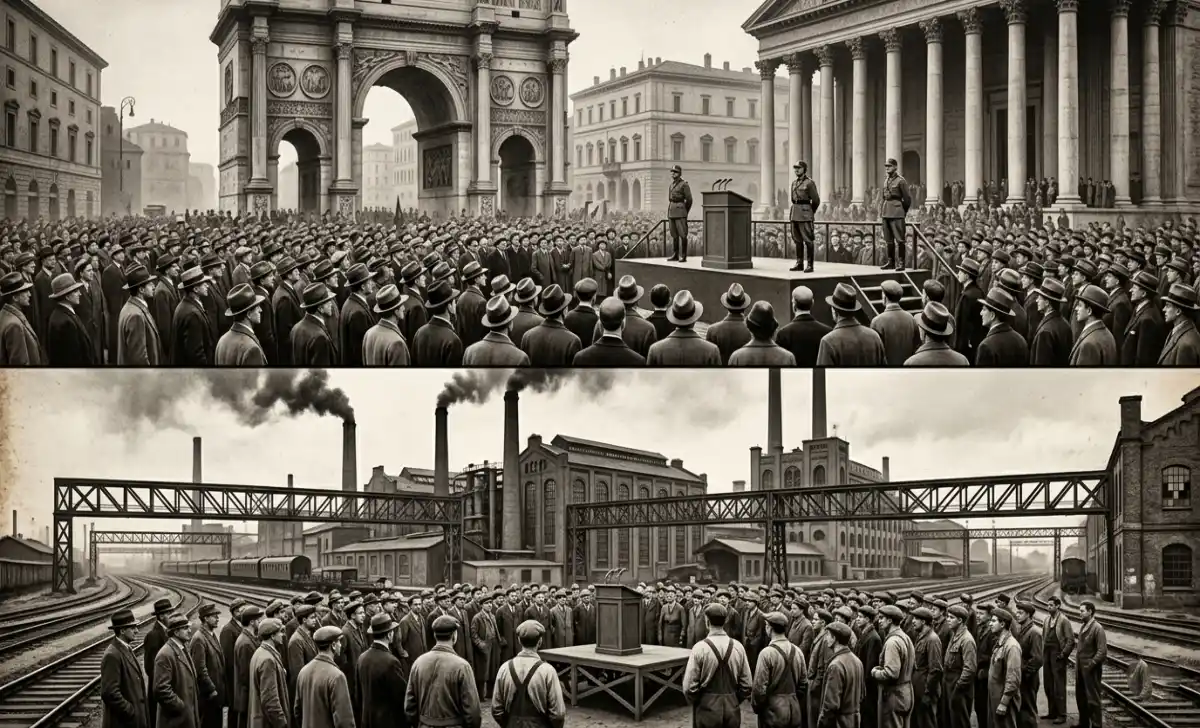
Many articles blur these two together, which leaves readers confused. It’s worth being clear.
Mussolini’s Italian fascism was primarily built around the glorification of the nation-state, corporatism (where the state coordinates between employers and workers), and a mythologized Roman past. Racial ideology was not central to it at the start.
Hitler’s Nazism borrowed heavily from Italian fascism but added a fanatical racial hierarchy at its core—the idea that certain groups were biologically superior and others needed to be eliminated. That distinction matters enormously when you’re trying to understand why the Holocaust happened in Germany and not in Mussolini’s Italy in the same systematic way.
Recognizing these differences doesn’t soften either regime. It just makes the history more accurate—and accuracy matters when we’re talking about events this serious.
| Feature | Italian Fascism | German Nazism |
|---|---|---|
| Core focus | Nationalist state power | Racial ideology + nationalist power |
| Leader figure | Mussolini | Hitler |
| Racial policy | Added later, under Nazi pressure | Central from the beginning |
| Duration | 1922–1943 | 1933–1945 |
Why Fascisterne Gained Popularity
Fascism didn’t just appear out of thin air. It rose under specific conditions—and understanding those conditions is more useful than simply calling the people who supported it evil.
- Economic desperation — High unemployment and inflation left people looking for fast, firm answers.
- Social unrest — After years of war and instability, many wanted order, almost at any cost.
- Fear of change — Rapid modernization and political upheaval left communities feeling left behind.
- Effective propaganda — Fascisterne were highly skilled at shaping public emotion through simple, repeated messages.
The movements offered something that felt like purpose, belonging, and certainty. That’s a powerful combination for people who feel the system has already failed them. It’s uncomfortable to acknowledge, but it’s true—and it’s exactly why the history keeps getting studied.
How It Collapsed—and What It Left Behind
Fascisterne movements that came to power delivered short-term spectacle: parades, infrastructure projects, a sense of national purpose for some. But the long-term effects were catastrophic. Suppressed freedoms led to corruption and incompetence at the top. Wars of conquest drained resources. The rejection of pluralism made entire societies brittle.
By the end of World War II, the human cost was staggering—cities destroyed, economies shattered, and a generation traumatized across an entire continent.
The defeat wasn’t just military. It discredited the ideology in the eyes of most of the world for decades. What came after—stronger international institutions, human rights frameworks, the United Nations—grew directly out of the determination not to let it happen again.
If you want to understand how modern financial systems and global institutions were rebuilt in the post-war period, this overview of fast-moving markets and financial trust touches on some of that longer institutional history in an accessible way.
The Word “Fascist” Today: Accurate Label or Just Name-Calling?
This is worth addressing honestly, because the term gets thrown around constantly in modern debates—sometimes accurately, sometimes as pure rhetorical ammunition.
When does it apply? When you see a genuine combination of: cult-like leader worship, open contempt for democratic institutions, scapegoating of ethnic or religious minorities, glorification of political violence, and systematic suppression of independent media. That’s not a checklist any one movement always completes, but it’s what historians look for.
When is it name-calling? When it’s used to mean simply “authoritarian” or “someone I strongly disagree with.” Not every strongman qualifies. Not every nationalist movement fits the label. Overusing the word dilutes its meaning and makes serious conversations harder.
The honest answer is: the term is most useful when applied carefully and specifically, not as a catch-all for anything that feels threatening.
Warning Signs Worth Watching Today
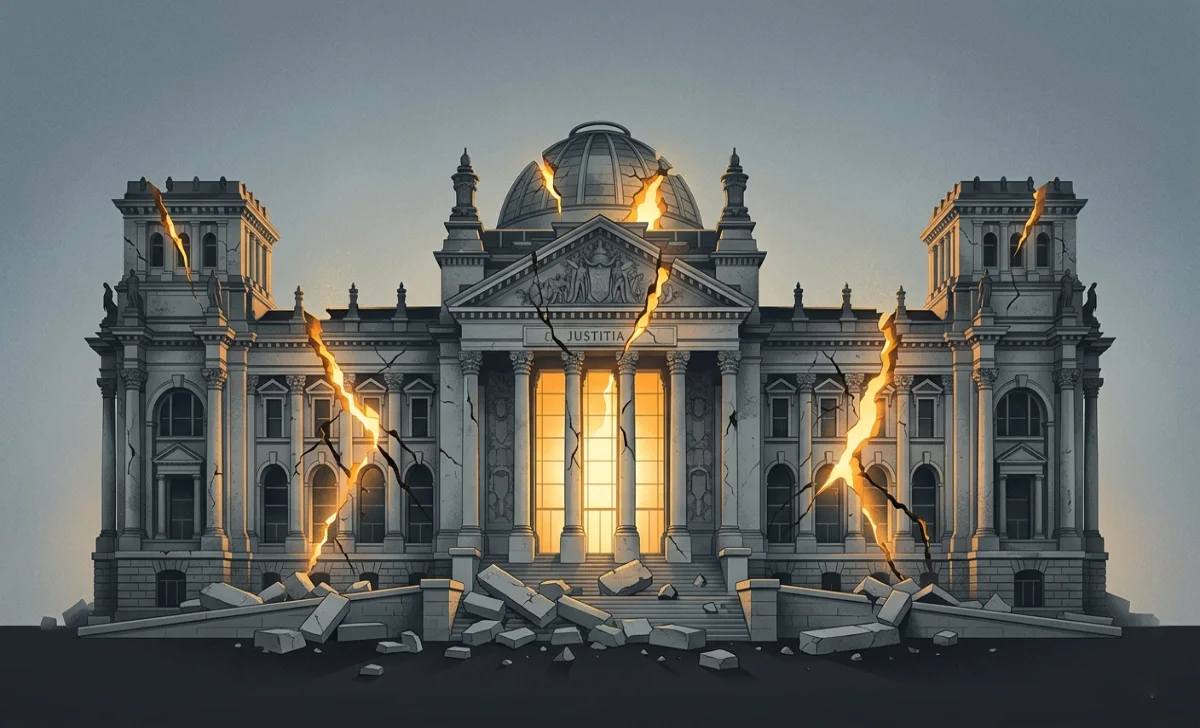
The conditions that fed fascism historically—economic anxiety, cultural clashes, deep distrust in institutions—haven’t disappeared. When people feel left behind or believe the system is rigged against them, harder-edged, simpler political messages can regain appeal. That’s not inevitable, but it is worth watching.
Practical patterns to pay attention to:
- Political leaders who frame all disagreement as betrayal
- Attacks on the independence of courts, press, or election systems
- Scapegoating of specific groups for broad social problems
- Glorification of force as a legitimate political tool
- The idea that only one group of people truly belongs in the nation
These aren’t signs of fascism on their own—context always matters. But historically, when several of them appear together and reinforce each other, the direction tends to be worth noting early rather than late.
For a wider look at how political and social signals translate into real-world consequences—including economic ones—this analysis of fast-moving trends offers some useful framing around risk, momentum, and timing.
What Can We Take Away?
You don’t need a history degree to apply these lessons. A few practical things make a real difference:
- Pay attention to how leaders describe “the people” versus democratic institutions
- Notice when disagreement gets labeled as disloyalty rather than a normal part of politics
- Support independent media and transparent institutions, even when it’s inconvenient
- Teach critical thinking and honest history—including the uncomfortable parts
Most importantly: stay engaged in everyday democratic life. Voting, local organizing, talking across genuine differences. History shows that fascism rarely wins in stable societies where people feel they have a real stake in the outcome.
It leaves me with a quiet question worth sitting with: What small choices are we making right now that could either strengthen democratic habits—or slowly chip away at them?
FAQs
What does “fascisterne” actually mean in plain terms?
It’s the Danish and Norwegian word for “the fascists.” It refers to people or groups who support fascism—an authoritarian, ultranationalist ideology built around strongman rule and suppression of opposition.
How is fascism different from other authoritarian systems?
Fascism has specific traits: extreme nationalism, rejection of democracy, a cult of the leader, and often glorification of violence and hierarchy. Not every dictatorship is fascist—military juntas or communist regimes share authoritarianism but have very different ideological roots.
Why did fascism take hold after World War I?
A combination of economic collapse, national humiliation, fear of communism, and loss of faith in democratic institutions created conditions where simple, aggressive answers felt appealing to many people. Leaders who promised order and national greatness filled that vacuum.
Does the term fascisterne still apply to politics today? The full package is rare in modern Western democracies, but elements—leader worship, scapegoating, attacks on independent institutions—do appear. Applying the label carefully and specifically, rather than loosely, keeps the conversation useful rather than just inflammatory.
Was every European dictatorship in the 1930s fascist?
No. Franco’s Spain had fascist elements but was also deeply shaped by the Catholic Church and conservative military traditions. Stalin’s Soviet Union was totalitarian but communist, not fascist. The specific combination of ultranationalism, anti-democracy, and the cult of the leader is what defines fascisterne movements.
This article is written for educational and informational purposes. It is not intended as political advocacy of any kind. Historical interpretations are drawn from mainstream academic sources.