





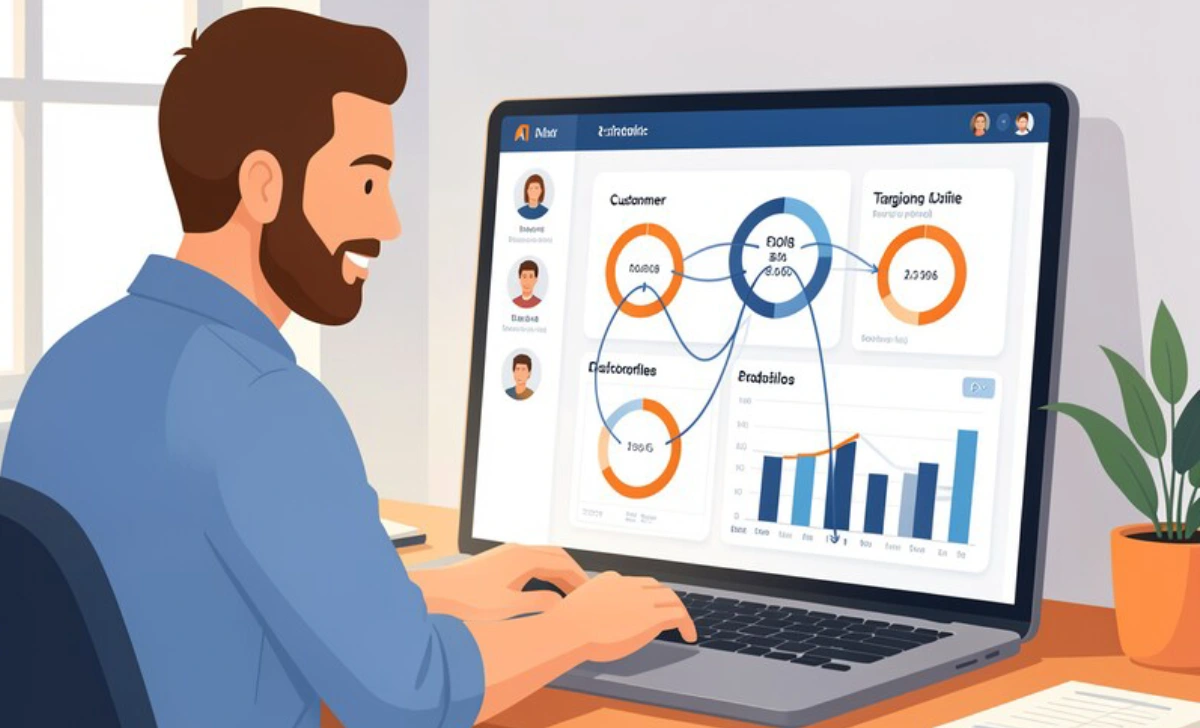
AI marketing tools help small businesses identify their best customers, predict what they’ll buy next, and send messages that actually convert. You don’t need a tech degree or a big budget to start. Most tools offer free trials and simple interfaces that work right away. The real value comes from understanding your customer better than your competitors do.
This guide shows you exactly how to use AI marketing tools to stop guessing who your customers are and start targeting them with precision. You’ll learn which tools to try first, how to set them up in under an hour, and what data actually matters. By the end, you’ll know how to reach the right people at the right time without burning through your marketing budget on audiences that won’t convert.
Why Most Small Businesses Waste Half Their Marketing Budget
You’re running ads. You’re posting content. You’re sending emails. But you can’t shake the feeling that most of your effort lands in front of people who will never buy from you.
You’re right to feel that way. Traditional marketing methods force you to make educated guesses about who wants your product. You pick demographics, choose interests, and hope for the best. Half your budget disappears reaching people who scroll past without a second thought.
AI marketing tools change this completely. They analyze patterns in customer behavior you’d never spot manually. They predict which leads will convert before you waste time chasing cold prospects. They personalize messages for each customer segment without you writing 50 different versions.
The tools exist. Most cost less than your monthly coffee budget. You just need to know which ones solve real problems for businesses like yours.
Start With Customer Data You Already Have
You don’t need to buy expensive data sets. The information sitting in your current systems tells you everything AI needs to improve your targeting.
Pull data from your email list, past purchases, website visits, and social media followers. Export this into a spreadsheet or CSV file. Most AI tools accept this format directly.
Look at customers who bought from you in the past 90 days. What do they have in common? What pages did they visit? What emails did they open? This becomes your training data.
Common Mistake: Trying to analyze too much data at once. Start with your last 100 customers. That’s enough for AI to spot patterns.
Free tools like Google Analytics already track visitor behavior on your site. Connect this to an AI platform, and you’ll see which customer types convert best. Takes 15 minutes to set up.
Pick One AI Tool That Matches Your Biggest Problem
You face different challenges than the business next door. Choose tools that fix your specific pain points.
If you struggle to know who visits your website, Try Hotjar (free plan available) or Microsoft Clarity (completely free). These show exactly how people interact with your site. The AI identifies where visitors drop off and which segments stay longest.
If you can’t figure out which leads to follow up with, look at tools like HubSpot’s free CRM or Zoho CRM (free for 3 users). Their AI scores lead based on behavior patterns. You’ll instantly see who’s ready to buy versus who’s just browsing.
If your email open rates are terrible, use tools like Mailchimp’s Customer Journey Builder or Klaviyo. Their AI recommends the best send times for each subscriber and suggests subject lines that match past opens.
Start with one tool. Master it over 30 days. Then add another if needed.
Pro Tip: Most AI marketing tools offer 14-day free trials. Test three tools in the same month. Pick the one that feels easiest to use daily.
Let AI Segment Your Audience While You Sleep
Manual segmentation takes hours, and you still miss patterns. AI does this in seconds and finds groups you’d never consider.
Upload your customer list to your chosen tool. The AI will automatically create segments based on purchase history, browsing behavior, email engagement, and dozens of other factors.
You’ll discover segments like “browses high-ticket items but only buys during sales” or “opens every email but never clicks through.” Each segment needs different messaging.
A real example: A freelance graphic designer used AI segmentation in Mailchimp and found 30% of her list only engaged with posts about logo design. She created a separate campaign just for that segment. Her conversion rate jumped from 2% to 11% in one month.
The AI updates these segments automatically as customer behavior changes. You don’t maintain spreadsheets or manually move people between lists.
Create Personalized Messages Without Writing 100 Versions
You know personalization works. You also know you can’t write custom content for every customer.
AI tools like Copy.ai or Jasper analyze your best-performing content and generate variations for different segments. Feed the AI one email template. It creates versions tailored to each audience group.
The variations aren’t just name swaps. The AI adjusts tone, benefits highlighted, and call-to-action based on what each segment responds to.
Test this with your next email campaign. Write one master version. Let the AI create three variations for your top three segments. Send them out. Track which performs best.
Time estimate: 20 minutes to set up. The AI handles the rest.
You can also use AI chatbots on your website that adjust responses based on visitor behavior. A first-time visitor gets educational content. A returning visitor who’s viewed pricing three times gets a direct offer.
Track What Actually Predicts Sales
Most business owners drown in metrics that don’t matter. AI cuts through the noise and shows you the three to five data points that actually predict conversions.
Your AI tool will analyze hundreds of variables and identify the ones that correlate with purchases. Maybe it’s “visited the site on mobile at night” or “clicked three comparison articles before buying.”
These insights transform how you target. You stop wasting money on vanity metrics like page views and focus your budget on behaviors that lead to sales. When you combine AI-powered customer targeting with smarter AEO tactics, you create a system that brings qualified traffic and converts them at higher rates.
A small online bookstore used AI analytics and discovered that customers who added items to their wishlist but didn’t buy within 48 hours had an 89% chance of never returning. They built an automated email targeting that specific behavior. Recovery rate: 23% of abandoned wishlists converted within a week.
Set up conversion tracking in your AI tool. Let it run for two weeks. Check the report. You’ll see exactly which customer actions predict sales.
Combine AI Targeting With Your Broader Marketing Strategy
AI marketing tools work best when they’re part of a bigger plan. You need to connect what the AI discovers about your customers to how you attract them in the first place.
Think about your content strategy. If AI reveals your best customers research products extensively before buying, you need content that answers their questions at each stage. If your highest-value segment finds you through voice search, you need to optimize for how people actually ask questions out loud.
Small businesses often overlook how AEO marketing strategies complement AI targeting. Answer Engine Optimization helps you show up when potential customers ask questions. AI marketing tools help you convert those visitors once they arrive. The two work together to fill your pipeline with qualified leads.
Your AI tool might tell you that customers who read comparison content convert 3x better. That’s your signal to create more comparison guides optimized for answer engines. You’re not just attracting random traffic. You’re attracting people already primed to buy.
Avoid These Expensive Mistakes
Trusting AI blindly: The tools are smart but not perfect. Review their recommendations weekly. If something feels off about a segment or prediction, investigate why.
Buying too many tools at once: One good AI marketing tool beats five mediocre ones you barely use. Start small. Expand only when you’ve mastered your first choice.
Ignoring the human element: AI finds patterns. You still need to understand why those patterns exist. A customer who buys every January might be using a yearly budget, not responding to your winter campaign.
Forgetting to clean your data: AI learns from what you feed it. Old email addresses, duplicate entries, and incorrect customer information teach the AI wrong patterns. Spend an hour cleaning your data before uploading it.
Expecting instant results: AI needs time to learn your customers. Give new tools at least 30 days of data before judging performance.
Your First Week Action Plan
Day 1: Export your customer data from your current systems. Clean out duplicates and outdated information. Takes 1 hour.
Day 2: Pick one AI marketing tool based on your biggest pain point. Sign up for the free trial. Takes 30 minutes.
Day 3: Upload your customer data and let the AI create initial segments. Takes 15 minutes of your time plus overnight processing.
Day 4: Review the segments the AI created. Do they make sense? Adjust if needed. Takes 45 minutes.
Day 5: Create one simple campaign targeting your most engaged segment. Use AI to personalize the message. Takes 1 hour.
Day 6: Launch your campaign. Takes 10 minutes.
Day 7: Review early results. What’s working? What needs adjustment? Takes 30 minutes.
You’ve now used AI to improve your targeting without overhauling your entire marketing operation.
What Success Actually Looks Like
You won’t triple revenue overnight. Realistic wins look like this:
Your email open rates climb from 18% to 27% because the AI sends at optimal times for each subscriber.
You stop wasting ad budget on audiences that never convert. Your cost per acquisition drops by 30%.
You identify high-value customer segments you didn’t know existed. You create offers specifically for them.
Your follow-up emails reach people right when they’re ready to buy because the AI predicted their purchase timing.
These improvements compound over months. Your marketing gets smarter while requiring less manual work from you.
Moving Forward With Confidence
AI marketing tools don’t replace your judgment. They amplify it. You still make the final calls about messaging, offers, and strategy. The AI just helps you make those decisions with better information.
Start this week with one simple step: pick one AI tool and run one test campaign. Watch what happens when you target customers based on behavior patterns instead of guesses.
The businesses winning with AI marketing right now aren’t the ones with the biggest budgets. They’re the ones who started small, tested consistently, and learned what works for their specific customers.
You can do the same. Your ideal customers are already leaving clues about what they want. AI marketing tools help you spot those clues and act on them before your competitors do.