




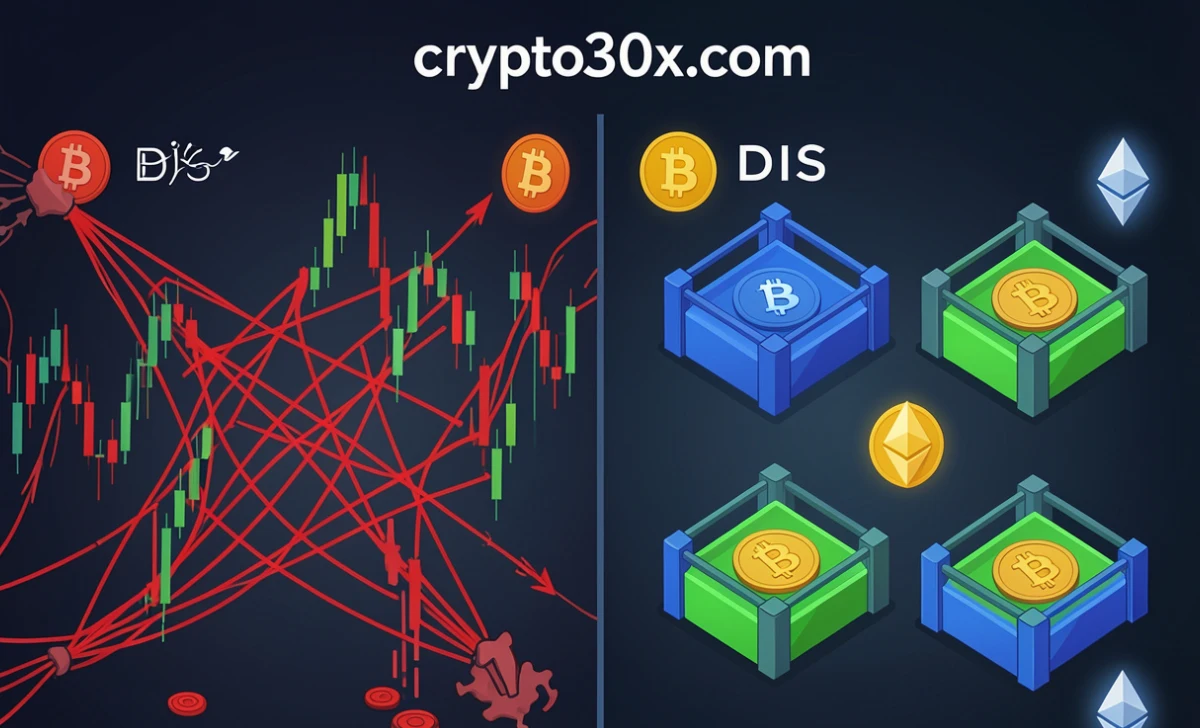
High leverage in crypto means small price moves can wipe out your entire account in minutes. Crypto30x.com’s DIS (Dynamic Isolation System) works like a circuit breaker, keeping individual losing trades from dragging down your whole portfolio. I started trading at 30x leverage, thinking one bad position would blow everything up. What I found is that this system isolates each trade so losses stay contained, but it doesn’t eliminate the core risk that comes with borrowed capital.
The biggest gap most traders miss: understanding what DIS actually protects you from and where it won’t help. It won’t save you from a trade moving fast against you. What it does stop is the cascade effect where one losing position triggers margin calls across every other position you hold. That distinction matters more than you’d expect when you’re running multiple leveraged trades simultaneously.
What Is Crypto30x.com DIS?
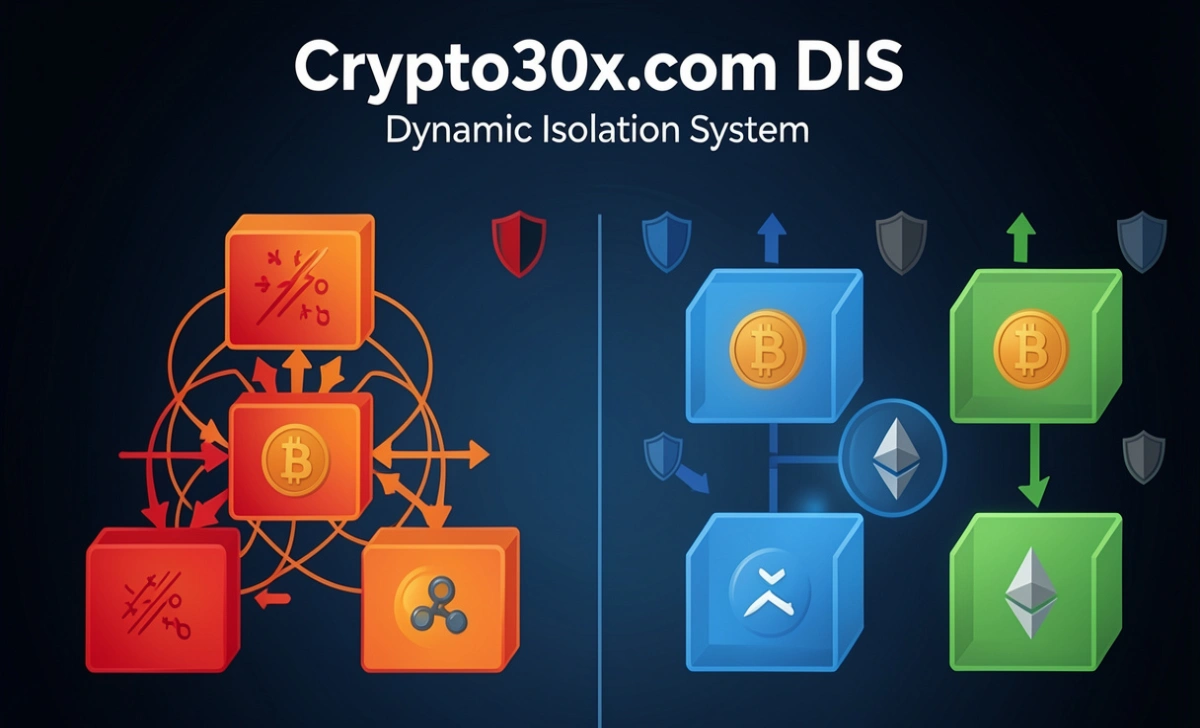
DIS stands for Dynamic Isolation System, and the name tells you most of what you need to know. It’s a built-in safety mechanism that separates your trading positions so they don’t bleed into each other when things go wrong.
I’ll be straight with you: the first time I opened a 30x position, I was nervous about getting liquidated. With 30x leverage, a move of just 3-4% against you can wipe you out. That’s where the DIS comes in. Instead of treating your entire account like one big bucket of money, it creates individual containers for each trade. If one container springs a leak, the others don’t drain.
Think about how traditional margin trading works at most exchanges. You throw money into a pool, and every trade you make draws from that same pool. Lose on Bitcoin, and the platform can grab funds from your Ethereum position to cover it. Everything gets tangled together. The DIS approach is different. Each position gets its own collateral wall, monitored independently.
The platform watches what’s happening in real time and adjusts how much cushion each trade needs based on market conditions. When volatility spikes, the system tightens up. When things calm down, it relaxes. Like most financial tools, it’s not magic, but understanding how it works changes how you can trade with more confidence. For a deeper dive into platform reviews and features, you can explore how other trading platforms handle these kinds of safety mechanisms, which gives context for why isolation systems matter in the broader trading landscape.
How It Actually Works
Let me walk you through what happens behind the scenes when you’re running multiple positions.
The platform keeps a constant track of every open trade you have. It’s watching price, volatility, and your account balance at all times. When a position starts losing money, the system doesn’t just wait around for liquidation to happen. Instead, it dynamically adjusts how much of your collateral is backing that specific trade based on what’s happening in the market right now.
Here’s the practical breakdown: your funds get separated by position, not pooled together. I typically run 3-4 positions at the same time. With DIS, if my Ethereum long gets hit hard, my Bitcoin and Solana trades don’t get touched. The margin requirement for Ethereum goes up as risk increases, but my other collateral stays allocated to those other positions.
During normal trading conditions, this runs quietly in the background. You don’t think about it. But during flash crashes or sudden volatility spikes, you’ll notice the system working. I remember the panic during a sharp Bitcoin drop last year. My short position was fine, but my long position in an alt suddenly had a margin call. Instead of liquidating everything, the system isolated the problem to just that one trade. I had time to decide: close it, add more collateral, or reduce the position size.
The speed matters here. Markets move fast. You need a system that reacts in milliseconds, not seconds. The DIS is fully automated, which sounds mechanical but is actually what you want. When a market is dropping 5% in minutes, you don’t have time to think about risk management. The system handles it. As you explore different platforms and their risk frameworks, you’ll find that education and transparency about these mechanisms matter just as much as the features themselves.
Why High Leverage Trading Needs This Kind of Protection
Let’s talk about why this matters. High leverage amplifies everything, good and bad. When I first started trading with 30x, I thought the biggest risk was just picking the wrong direction. Buy Bitcoin at $50,000, it drops to $48,500, and you’re liquidated. That’s still the core risk, but the DIS changes what happens around the edges.
Without isolation, one losing trade can trigger a domino effect. You lose on one position, the platform sells other positions to cover the loss, and suddenly, your entire portfolio is collapsing because of a single bad call. That’s contagion. With DIS, that doesn’t happen. Your losing trade gets managed separately.
Some traders argue that this actually limits upside potential. If the system forces you to add collateral during a brief spike in volatility, you miss the rebound that comes minutes later. Fair point. I’ve watched that happen. But here’s my honest take after a few years of this: surviving a bad trade is worth more than catching every bounce. The traders who last are the ones who manage risk first and chase profits second.
Where DIS becomes crucial is during those unexpected moments. A regulatory announcement, a sudden liquidation cascade on another platform, or a technical glitch can create wild price swings. The DIS doesn’t prevent these events, but it contains the damage. Your account stays functioning while the chaos plays out, which gives you options. You can close positions, add capital, or wait it out. The traders who blow up are the ones without any buffer. Understanding how platforms approach risk management during extreme events is worth researching, and you can find comparisons of different approaches to trading safety across various platforms.
Practical Setup Tips for Using the DIS
If you’re planning to trade with high leverage on Crypto30x.com, here’s what actually works based on what I’ve learned.
Start smaller than you think. Even with DIS protecting you, 30x leverage is aggressive. I began with 10x positions just to understand how the system reacted during normal price moves. Gradually increased from there once I felt comfortable with how the platform responded.
Keep notifications turned on. The DIS will alert you before things get critical. These aren’t spam warnings; they’re real signals that the system is asking for more collateral or adjusting requirements. I check my positions at least a few times daily, especially during high-volatility periods.
Diversify your positions across different assets. Because DIS isolates risk by position, you can actually run multiple trades without worrying that one will destroy the others. This is huge. I typically keep 3-4 positions in different assets, so a single bad trade doesn’t ruin my week. One position might be a Bitcoin short, another a Solana long, and another a smaller alt play. The isolation protects each one independently.
Understand how volatility changes the system’s behavior. During calm markets, DIS is relaxed about collateral requirements. When things get choppy, it tightens up. I’ve learned to reduce position sizes during high-volatility periods rather than fighting the system. If you’re running the same size position during 5% volatility and 15% volatility, you’re not managing risk; you’re just hoping.
What the DIS Actually Does (and Doesn’t Do)
Let’s get clear on the limits of what you’re getting with this system.
DIS does not guarantee you won’t get liquidated. If the market moves hard enough and fast enough against your position, you’ll still get liquidated. What it prevents is that chain reaction where your other positions go down with it.
DIS is different from a standard stop-loss, and that matters. A stop-loss closes your position when it hits a certain price. DIS doesn’t close anything. It manages the collateral backing your position and alerts you when things are getting tight. You still decide to close, hold, or add margin.
DIS doesn’t slow down your trades. The system runs in the background. Your order execution speed isn’t affected. There’s no hidden fee for this protection either. It’s just how the platform’s collateral system works.
During a flash crash, the DIS does what it was designed to do: it prevents contagion. Your positions don’t wipe out each other. But individual positions can still be liquidated if the price move is severe enough. The difference is that the losses stay contained to that one position.
Final Thoughts
Trading with high leverage using Crypto30x.com DIS isn’t about getting rich quickly. It’s about developing a sustainable approach in a market that rewards preparation and punishes overconfidence.
The traders who last are the ones who respect risk above all else. They treat every system as something to verify, not blindly follow. They manage drawdowns carefully. They survive multiple market cycles instead of burning out after one bad swing.
If you’re exploring this, take it one step at a time. Start with education. Paper trade first if possible. When you do go live, use small position sizes. Pay attention to how the system actually behaves during real price action, not just calm markets. Adjust as you learn. Keep your capital safe.
The market will still be here in a few years. Your account doesn’t have to disappear before then.
FAQs People Ask
Is DIS suitable if I’m new to leverage trading?
No. DIS is a helpful safety feature, but high leverage itself isn’t beginner-friendly. Start with education, low leverage, and small positions until you understand how margin works and what liquidation actually feels like. DIS helps manage risk, but it doesn’t eliminate it.
Can DIS deliver consistent returns with 30x leverage?
No tool guarantees consistency with high leverage. The best outcomes come from discipline and realistic expectations, not from any single system. DIS helps you survive and manage risk better. That’s its job.
What’s the main risk I should know about?
Liquidation from small adverse price moves. Emotional decision-making under pressure. Platform-specific issues. And the general volatility of crypto. Always assume the worst-case scenario is possible.
Is this better than other leverage platforms?
DIS emphasizes data-backed isolation alongside high leverage. Results vary by user. Some traders appreciate the analytical layer. Others prefer simple execution-focused exchanges. Test it yourself with small positions first.