





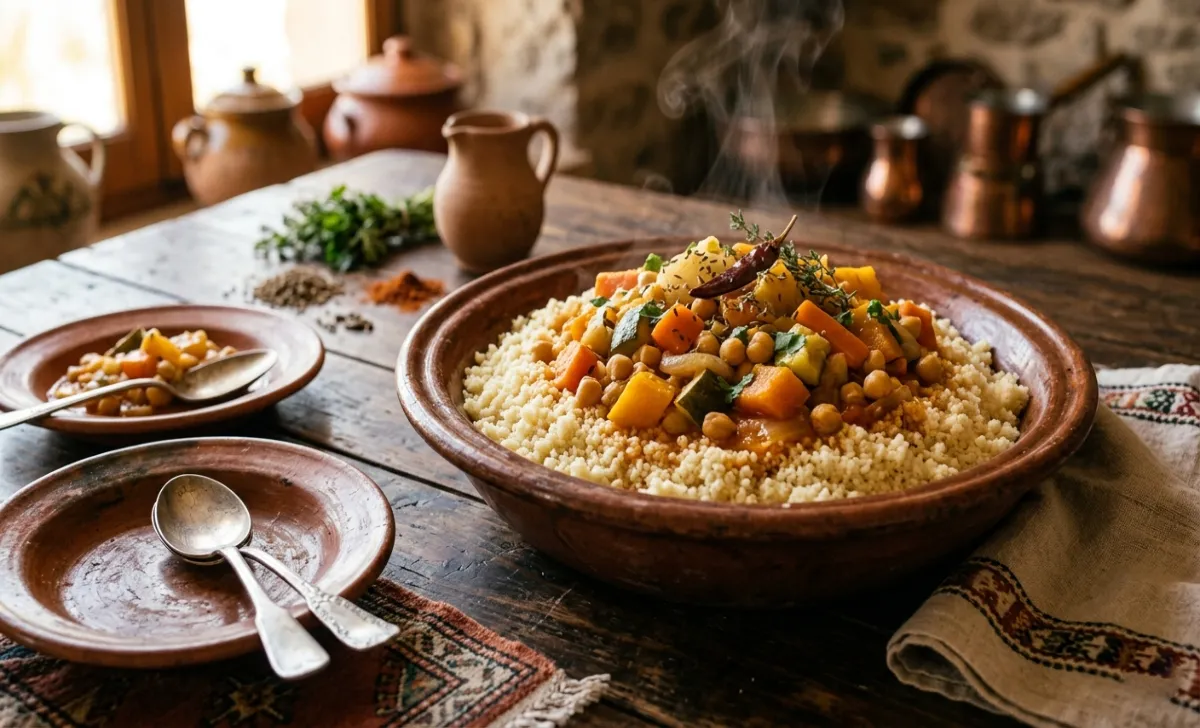
Kouskousi is a traditional dish made from hand-rolled semolina granules, closely related to North African couscous but distinct in texture, preparation, and cultural identity. Rooted in Berber (Amazigh) communities, it has been passed down for centuries through family kitchens, celebrated at gatherings, and shaped by trade routes that carried spices and techniques across borders. Unlike the quick-cook boxed couscous most people grab from a supermarket shelf, the real version is rolled by hand, dried, and steamed slowly over a flavorful broth. The result is a heartier, more textured grain that absorbs flavor in a way that instant versions simply cannot match.
What makes kouskousi worth knowing is not just its age. It carries the weight of real communities — families who made it together, generations who learned it by touch rather than recipe card. Across North Africa, Greece, Turkey, and Jewish diaspora kitchens, this dish has taken different shapes while keeping the same soul: slow-cooked, shared, and deeply personal.
Some dishes never make it onto restaurant menus or food trend lists. They stay local. Passed down quietly, cooked the same way for generations, loved by the people who grew up eating them.
Kouskousi is one of those dishes.
The name probably means nothing to you right now. But once you understand where it comes from and how it is made, you will want to know more. This dish carries centuries of food history — shaped by basic ingredients, old techniques, and the kind of family rituals that do not make it into cookbooks.
What draws me to kouskousi is not just the flavor. It is the story. You can see the resourcefulness of communities that turned simple grains into something nourishing. You can trace how trade routes left their mark on the recipe. And you realize, again, how tightly food and identity are tied together.
What Is Kouskousi?
Let us clear up the confusion first. Kouskousi is a traditional grain-based dish closely related to couscous — but not the same thing. The name sounds familiar, and that is not an accident. Kouskousi usually refers to a regional version that differs in grain size, cooking method, and what gets served alongside it.
At its core, kouskousi starts with semolina or crushed durum wheat, carefully worked by hand into small granules, then steamed rather than boiled. That steaming step is what gives it a light, fluffy texture that holds up well under a rich broth. Unlike the standardized couscous you see in most grocery stores, kouskousi shifts depending on where you are. Some versions are coarse. Others are fine. Some are served with slow-cooked stews; others are kept plain so the grain does the talking.
There is also a fascinating regional twist worth mentioning: in parts of Greece and Turkey, a version called kouskousaki gets boiled like a short pasta and finished simply with cheese, walnuts, or butter. It is a completely different experience from the North African method, and most articles on this topic skip it entirely.
What makes kouskousi interesting is how adaptable it is. It is not one fixed dish. It is more like a cooking tradition that bends with geography, climate, and local taste — the way a slow-cooked nilagang baka reflects its own region’s palate and patience.
Historical Roots and Cultural Origins
The story of kouskousi goes back centuries — long before packaged food or modern kitchens. In North Africa, communities depended on hardy grains like wheat and barley. These could survive dry climates, store for months, and stretch a modest meal. That practicality made them the foundation for dishes like kouskousi.
Many food historians point to the Berber (Amazigh) people of North Africa as the originators, with early references appearing in medieval Arabic texts. The name itself echoes old words meaning “well-rolled,” referencing both the motion and the sound of working the semolina.
Here is a detail worth pausing on: historically, making kouskousi was a group activity. Families and neighbors gathered to roll semolina by hand. It took patience and skill. But it was never just about getting dinner ready. It was a social ritual — people shared stories, split the labor, and stayed connected through the work itself.
Trade routes left their mark too. As merchants moved across regions, they brought spices, techniques, and new ingredients. Those outside influences folded into local habits over time. That layering is why you find so many variations today. Kouskousi does not have a single origin story. It has many.
Ingredients and Traditional Preparation
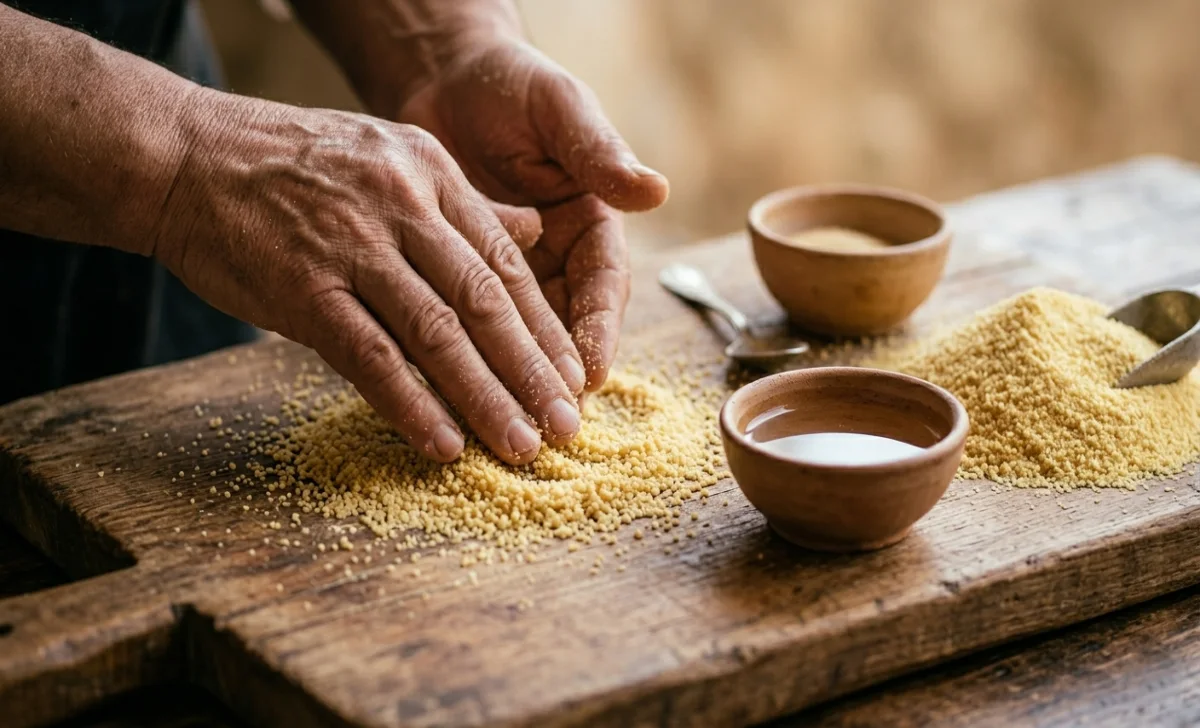
The beauty of this dish is how simple it starts. The main ingredient is durum wheat semolina. You add water slowly while rolling the semolina into tiny granules. That rolling step matters more than most people expect — it sets the final texture.
Once formed, the granules are dried and then steamed in a special pot called a couscoussier, though a colander set over a pot of simmering broth works fine at home. Steaming is the real secret here. It cooks the grains evenly, keeps them separate, and preserves a lightness that boiling destroys.
You cannot rush this step. Steam too long, and the grains clump. Too little, and they are underdone. The best approach is a two-stage steam: steam, fluff with a fork, rest, then steam again. It sounds slow because it is — and that is the point.
Traditional kouskousi gets paired with slow-cooked stews of vegetables, legumes, or meat. The broth soaks into the grain without overwhelming it. A little olive oil, mild spices, fresh herbs. Nothing heavy. Just balance. If you enjoy that kind of layered, ingredient-led cooking, lasagna baked potatoes follow the same logic — the components build on each other rather than compete.
Regional Variations and Interpretations
No two versions of kouskousi are identical. That diversity is part of what makes it worth paying attention to.
In some regions, the granules are larger and feel more rustic. In others, they are finer. Coastal communities might serve it with a fish-based stew. Inland households often go with hearty meat or vegetable combinations. In Egypt, a version called koskosi leans sweet — served with sugar, cinnamon, nuts, and raisins for breakfast or even dessert. In the Maghreb, it is closely tied to Friday family gatherings, almost always made in large batches to share.
Jewish communities in the region, including Sephardi and Tunisian families, developed their own rhythms around kouskousi too — making it fresh on specific days when bakeries were closed, turning the preparation into something communal and loving.
Seasoning shifts just as much as the grain size. Some versions are aromatic and spiced. Others are intentionally plain so you actually taste the semolina. That range is what keeps kouskousi alive rather than frozen in time.
Nutritional Value and Health Perspective
Kouskousi is not just culturally rich. It is also a solid meal from a nutrition standpoint. Made from durum wheat, it delivers complex carbohydrates for sustained energy, moderate protein, and key minerals including selenium and magnesium.
Because it is steamed rather than fried or processed, most of that natural nutrition stays intact. Pair it with vegetables, legumes, or lean meat and you have a well-balanced plate without much effort.
What I appreciate about it is how digestible it is. That quality makes it suitable across a wide range of diets — from everyday family meals to people managing more specific dietary needs.
Culinary Techniques That Define Kouskousi
How you prepare kouskousi matters as much as what goes into it. Rolling semolina into even granules is not something you perfect on the first try. Too much water and the texture falls apart. Too little and the granules never fully form. In my experience reading about traditional grain preparations, the skill lives in your hands more than in any written instruction.
Then there is the steaming. Unlike boiling, steaming keeps each grain’s shape intact. The process is usually multi-stage: steam, fluff, rest, steam again. Each round layers the flavor from the broth below into the grain above.
These techniques are almost always passed down through families rather than taught in formal settings. That is why knowing how to make kouskousi well has always carried weight in the households that practice it.
Social and Cultural Significance
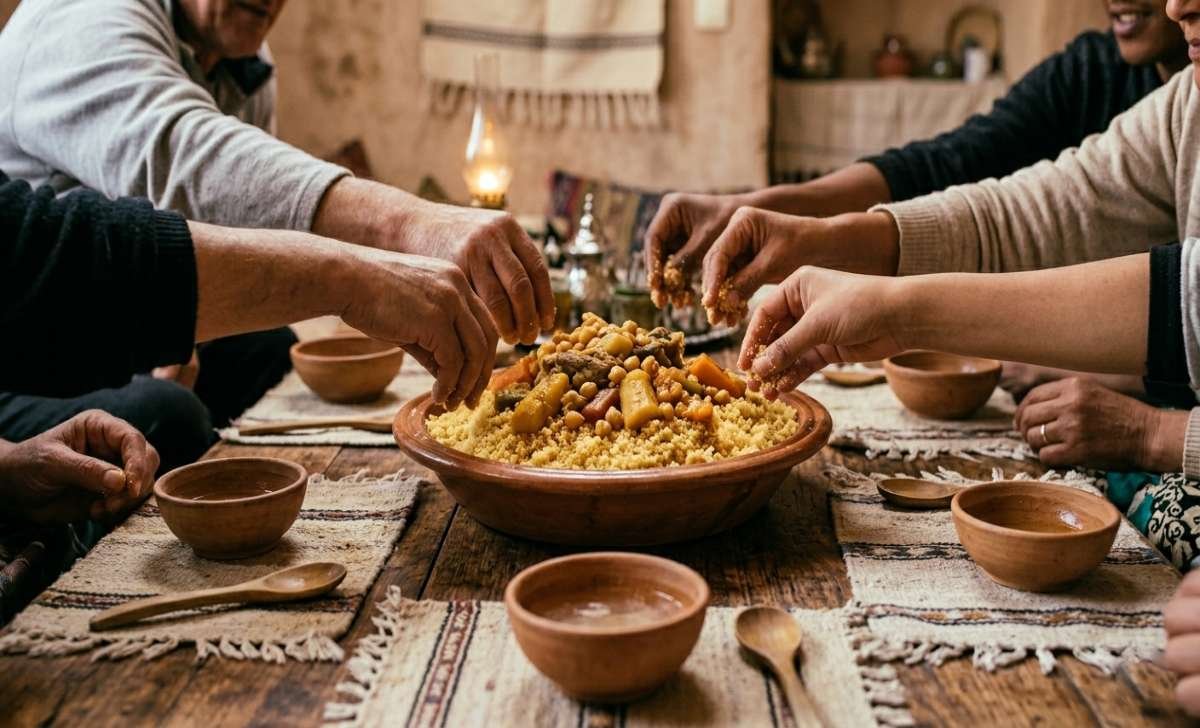
Kouskousi is not just food. It marks occasions. People make it for celebrations, religious gatherings, and family events. Sharing it from a communal dish — everyone eating from the same plate — is a gesture of trust and warmth.
Across North Africa and into diaspora communities, this dish is tied to specific moments in the calendar. It represents generosity as much as hospitality, because it is almost always made in large amounts meant to be given rather than kept. That social layer is what separates kouskousi from just being a meal. Much like ponadiza, which carries its own community rituals and festive weight, kouskousi is as much about the table around it as the plate on it.
Modern Adaptations and Global Presence
Even though kouskousi stays rooted in tradition, it has quietly found its way into contemporary kitchens. As more cooks look for dishes with real history behind them, interest in hand-rolled preparations has grown.
Some modern versions fold in international flavors, using traditional steaming methods with new ingredient combinations. Others lean toward whole grains or nutrient-dense additions. These changes are not betrayals of the tradition. They are just what happens when a living food culture meets a new generation of cooks.
The core stays constant. The texture, the steaming method, the communal serving style — those remain, even when everything else around them shifts.
Challenges in Preservation and Recognition
Why has kouskousi not become as widely recognized as other dishes from the same region? Two reasons stand out.
First, it is deeply local by nature. That intimacy is part of what makes it meaningful — but it also limits how far it travels. Second, the traditional method is labor-intensive. Hand-rolling and two-stage steaming require time that most modern schedules do not easily accommodate.
Still, there is a quiet movement to preserve this kind of knowledge. Food writers, home cooks, and community organizations are documenting traditional recipes and sharing them across generations. That effort is real and growing.
Conclusion
Kouskousi is a reminder that food is never just fuel. It is history, culture, and belonging in one bowl. From its origins in Berber communities to its role in Friday family meals, celebrations, and diaspora kitchens across the world, kouskousi carries a legacy worth knowing.
What makes it stand out is not its complexity. It is its honesty. The careful preparation, the subtle layered flavor, the way it draws people around a shared plate — that is what lasts. The next time you are in the kitchen with a bit of extra time, try rolling a small batch of semolina yourself. Start simple. A bit of flour, water, salt, and patience. Steam it over whatever broth or vegetables you have. Taste the difference.
You might find yourself wondering why we ever rushed it in the first place.
FAQs
Is kouskousi the same as couscous?
Not exactly. They are closely related, but kouskousi differs in preparation, texture, and regional variations. It is the hand-rolled, slower version of a broader tradition.
What is the main ingredient in kouskousi?
Durum wheat semolina. That is the foundation, worked by hand with water until it forms tiny granules.
How is kouskousi traditionally cooked?
Steamed, not boiled. The multi-stage steaming process keeps the grains separate, light, and full of flavor absorbed from the broth below.
Is kouskousi healthy?
Yes, in moderation. It provides complex carbohydrates, moderate protein, and key nutrients — particularly when served alongside vegetables or lean proteins.
Why is kouskousi not more widely known?
Because it has stayed local, the traditional preparation takes real time and effort. It has never been commercialized the way similar dishes have — and for many who love it, that is exactly the point.