





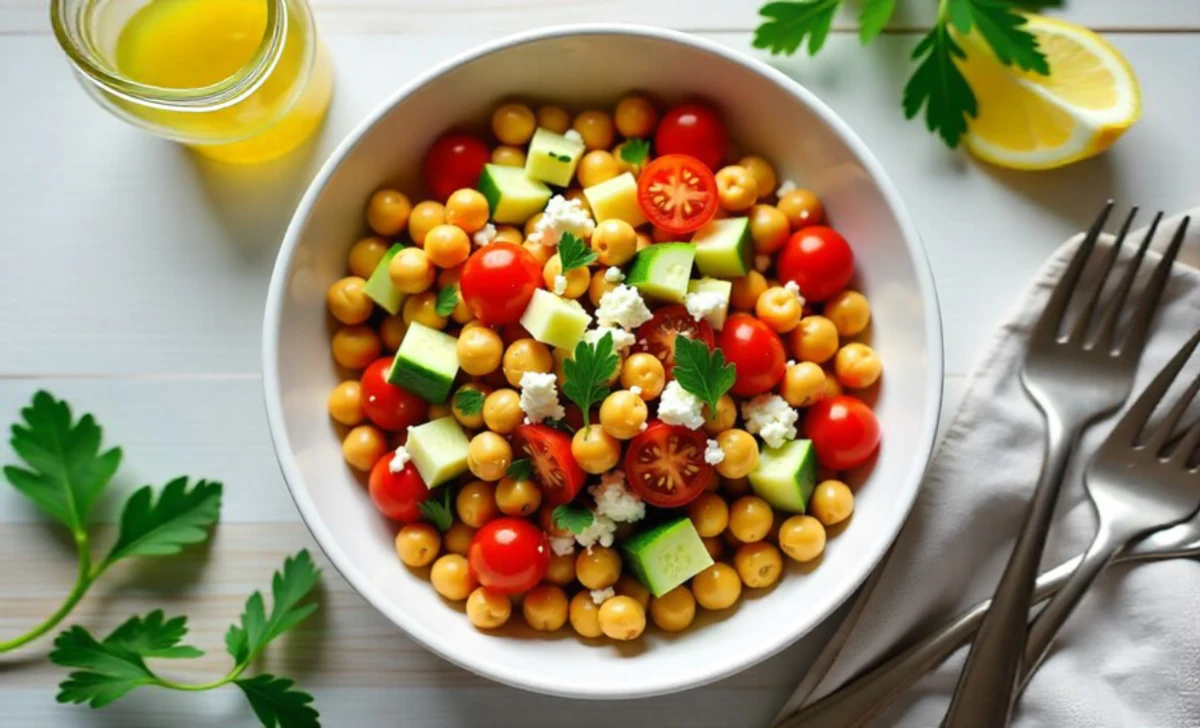
This Mediterranean chickpea salad takes about 10 minutes to make and uses ingredients you likely already have — chickpeas, cucumber, cherry tomatoes, feta, and a lemon. Drain your chickpeas, chop your vegetables into uniform pieces, whisk a simple lemon and olive oil dressing, toss everything together, and let it sit for five minutes before eating. Each serving delivers roughly 280 calories, 12 grams of protein, and 8 grams of fiber.
The recipe holds up in the fridge for four days, which makes it useful for weekly meal prep. The flavors deepen overnight as the dressing soaks into the chickpeas. Skip the feta for a dairy-free version, or swap in white beans if chickpeas aren’t available. Nothing in this recipe requires cooking, special equipment, or culinary experience.
You know those days when your fridge looks bare but you still want something fresh and satisfying? This Mediterranean chickpea salad was born on one of those days. During a particularly chaotic week, with no time to grocery shop properly, I grabbed what was left — two cans of chickpeas, a cucumber, cherry tomatoes, a block of feta, and a lemon. What came out of that scramble is now my most-used lunch recipe.
This salad works for meal prep and last-minute dinners equally well. You spend about 10 minutes chopping and mixing, and what you get back is a protein-packed meal that costs less than most coffee shop drinks. My neighbor makes a double batch every Sunday and eats it through the week without getting bored of it. That alone tells you something about how well it holds up.
Ingredients
For the salad:
- 2 cans (15 oz each) chickpeas, drained and rinsed
- 2 cups cherry tomatoes, halved
- 1 large cucumber, diced
- 1 cup crumbled feta cheese (about 5 oz)
- 1/4 cup red onion, finely diced
For the dressing:
- 3 tablespoons extra virgin olive oil
- 2 tablespoons fresh lemon juice
- 1 clove garlic, minced
- 1/2 teaspoon dried oregano
- Salt and black pepper to taste
No feta on hand? Goat cheese works. Out of cucumbers? Use bell peppers. A handful of fresh parsley or mint adds a lot if you have either. Kalamata olives are worth adding if you want a more traditional Mediterranean profile.
Instructions
Step 1: Prep your chickpeas. Drain and rinse them in a colander under cold water for about 30 seconds. Pat them dry with a kitchen towel or paper towels. This step matters — removing the starchy liquid helps the dressing cling properly. Let them air dry for a couple of minutes while you prep everything else.
Step 2: Chop your vegetables. Cut the cucumber into pieces roughly the same size as a chickpea. This creates bites where every component shows up together rather than competing. Halve your cherry tomatoes or dice regular tomatoes into similar-sized pieces. If you’re using red onion, soak the diced pieces in cold water for five minutes — the harsh bite disappears, but the flavor stays.
Step 3: Combine. Add chickpeas, tomatoes, cucumber, feta, and onion into a large bowl. Hold off on tossing until the dressing is ready.
Step 4: Make the dressing. Whisk together olive oil, lemon juice, garlic, oregano, salt, and pepper until the dressing looks emulsified. Taste it before pouring — it should be bright and slightly sharp. Adjust the salt or lemon at this stage, not after.
Step 5: Dress and toss. Pour the dressing over the bowl and toss gently until every chickpea is coated. Let the salad rest for at least five minutes before serving. That short window makes a meaningful difference — the chickpeas absorb the dressing and the flavors pull together.
Step 6: Taste and adjust. Add more salt, a squeeze of lemon, or a drizzle of olive oil if something feels missing. Your palate is the only tool you need here.
Why the Ingredients Work Together
Chickpeas stay firm under dressing for days without turning soft or mushy. That’s the structural backbone of why this salad works for meal prep in a way that a standard green salad doesn’t. The feta adds salt and creaminess without needing any mayonnaise or heavy base. Cucumber and tomatoes bring water content that keeps each bite from feeling dense.
The lemon and olive oil dressing does more than flavor — it preserves the freshness of the vegetables over several days. If you’ve tried other meal-prep salads that turn soggy by day two, the culprit is usually a cream or vinegar-heavy dressing that breaks down the produce. This one doesn’t.
From a nutrition standpoint, each serving gives you roughly 280 calories, 12 grams of protein, 8 grams of fiber, and healthy fats from the olive oil. That combination keeps blood sugar stable in a way that carb-heavy lunches typically don’t. Chickpeas also carry iron, folate, and magnesium, while the vegetables add vitamins C and K.
What to Serve With It
Warm pita bread alongside this salad gives you something to scoop with. Grilled chicken or salmon makes it a fuller dinner — if you want a quick weeknight protein to pair with it, this sheet pan salmon comes together with minimal effort and works perfectly alongside this salad.
For a low-carb meal, skip the pita and serve the salad over a bed of cauliflower rice. If you haven’t made cauliflower fried rice before, it’s worth trying — the two together make a filling lunch with real nutritional weight.
For dinner gatherings, build a mezze spread around this salad with hummus, tzatziki, baba ganoush, and stuffed grape leaves. A Sauvignon Blanc or Pinot Grigio cuts through the richness of the feta well. Iced mint tea works if you’re going non-alcoholic.
Leftovers pack well into pita pockets with extra greens, or you can spoon the salad over mixed greens for a different presentation the next day.
Variations Worth Trying
Sun-dried tomatoes bring concentrated sweetness if you want depth beyond fresh tomatoes. Artichoke hearts add a meaty texture that changes the character of the salad without overpowering it. Roasted red peppers from a jar bring subtle smokiness. White beans mixed in with the chickpeas change the texture in an interesting way.
For heat, add red pepper flakes or a finely diced jalapeño. Za’atar seasoning gives you a more distinctly Middle Eastern profile. Smoked paprika pulls the flavor in a different direction entirely.
If you’re serving this at brunch alongside something sweet, French crepes work surprisingly well as a contrast — this classic crepe guide walks you through the process if you haven’t made them before.
Storage and Meal Prep
Store the salad in an airtight container in the fridge for up to four days. The vegetables will release some water over time — drain it before eating. Keep the feta separate if you want it to stay crumbly rather than absorbing into the dressing.
For weekly prep, make a double batch at the start of the week. Pack individual servings into mason jars with dressing at the bottom, chickpeas and tomatoes in the middle, and cucumber and feta on top. Shake before eating. The day-two version typically tastes better than the fresh batch — the dressing has had time to work into the chickpeas fully.
Three Mistakes That Hurt the Final Result
Overdressing the salad makes everything heavy and wet. Start with less dressing than you think you need and add more after tasting. Cutting vegetables into large, uneven pieces creates clunky bites where the textures don’t line up. And skipping the five-minute resting period after tossing means you’re eating the salad before the flavors have had a chance to pull together — don’t rush that part.
Get Started
This recipe doesn’t require cooking skill or special equipment — just a knife, a cutting board, and a bowl. Adjust the vegetables based on what’s in your fridge. Change the dressing ratios until the balance feels right to you. The foundation is solid enough to hold up to whatever variation you throw at it.
What will you add to make it your own?