





You post on Instagram. You send emails. You respond to DMs. You update your website. And somewhere in there, you’re trying to actually run your business.
Most small business owners I work with feel like their marketing is a scattered mess. They know they need a funnel, but they’re too busy to manually follow up with every lead. That’s where automation comes in. When done right, it saves you hours each week and turns more browsers into buyers.
This article shows you how to strengthen your marketing funnel with automation, even if you’re not tech-savvy. You’ll learn which tools to use, where to automate (and where not to), and how to set it up in a weekend. No coding required.
What a Marketing Funnel Actually Does for Your Business
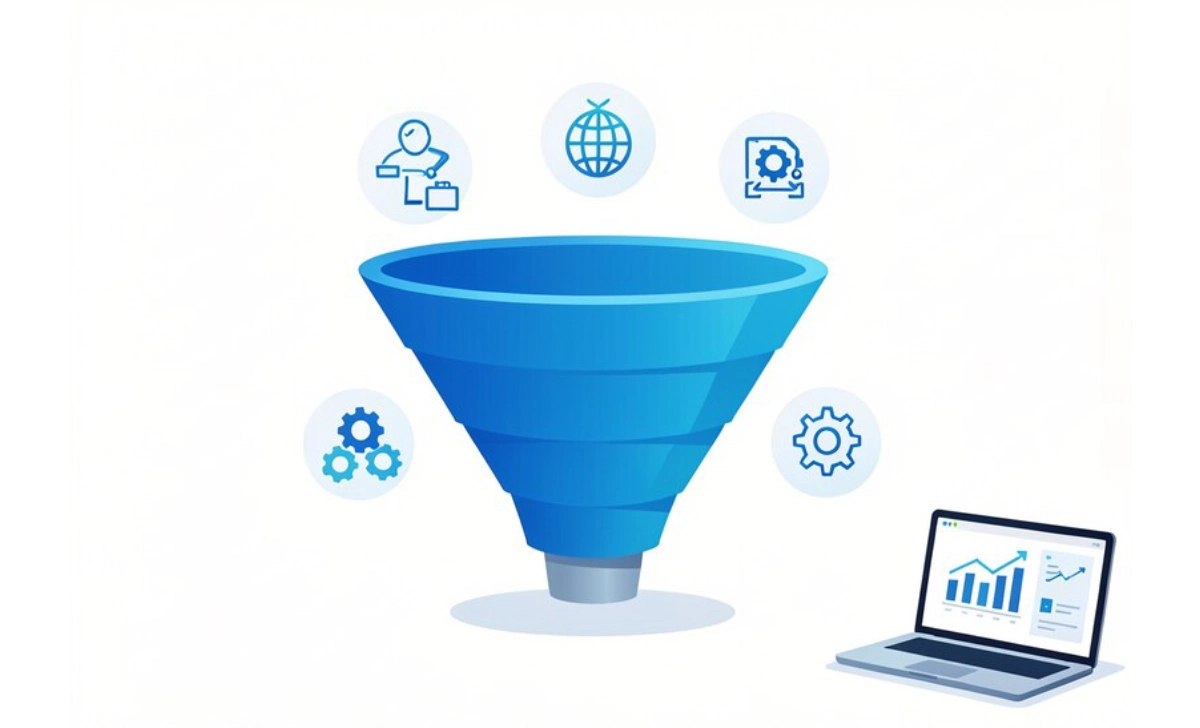
A marketing funnel guides strangers to becoming customers. It moves people from awareness (they find you) to consideration (they explore) to decision (they buy).
Without a funnel, you’re starting over with every customer. You answer the same questions repeatedly. You chase leads that go cold. You forget to follow up because you’re juggling ten other things.
A strong funnel does the repeating for you. It sends the welcome email. It reminds people of your offer. It shares helpful content so they trust you before they buy.
Automation makes this happen while you sleep. It’s not about being impersonal. It’s about being consistent when your time runs out.
Where Automation Fits in Your Funnel (and Where It Doesn’t)
Automation works best for repetitive tasks that don’t need a human decision every time.
Top of funnel (awareness): Use automation to schedule social posts, send new blog content to your email list, or run basic ad campaigns. This keeps you visible without logging in five times a day.
Middle of funnel (consideration): Automate email sequences that educate leads. Send a series of helpful tips, case studies, or product explainers. Tools like Mailchimp or ConvertKit can send these based on what someone clicks or downloads.
Bottom of funnel (decision): Automate reminders for abandoned carts, limited-time offers, or booking confirmations. But when someone asks a question or raises a concern, step in yourself. Don’t let a bot handle objections.
Common mistake: Automating everything. If someone replies to your email, responds to a DM, or fills out a contact form, they expect a real person. Don’t send them another canned message. Automation should free you up to have real conversations, not replace them.
The Four Tools You Need to Start (and One You Don’t)
You don’t need a dozen platforms. Start with these:
Email marketing tool: Mailchimp (free up to 500 contacts) or ConvertKit ($15/month) lets you build sequences, segment lists, and track opens. You can set up a welcome series in under an hour.
Social media scheduler: Buffer (free for three accounts) or Later ($18/month) lets you batch-create posts and schedule them across platforms. This turns four hours of daily posting into one focused session per week.
CRM or contact manager: HubSpot (free tier) or Notion (free) helps you track leads, note where they came from, and set follow-up reminders. Takes 30 minutes to set up.
Landing page builder: Carrd ($19/year) or Leadpages ($37/month) creates simple opt-in pages. You need one place to send people when they click your ad or social link.
What you don’t need yet: Full marketing suites like ActiveCampaign or Keap. They’re powerful but overkill for most businesses under $100K revenue. Start simple. You can always upgrade later.
If you want more options, this guide to AI marketing tools walks through beginner-friendly platforms that can save you hours each week.
How to Build Your First Automated Email Sequence This Weekend
An email sequence is the fastest way to strengthen your marketing funnel with automation. Here’s how to create one in two days.
Day 1: Plan Your Sequence (2 hours)
Write out what someone needs to know before they buy. Most small businesses need just five emails:
Email 1: Welcome. Thank them for signing up. Set expectations (how often you’ll email). Share one quick win or resource.
Email 2: Your story. Why did you start? What problem do you solve? Keep it under 300 words.
Email 3: Social proof. Share a testimonial, case study, or before-and-after. Real names work better than “Client X.”
Email 4: Offer. Explain what you sell and why it helps. Include a clear call to action (book a call, buy now, download the guide).
Email 5: Urgency or reminder. If they didn’t act, remind them gently. Offer a bonus or deadline if appropriate.
Space these 2–3 days apart. People need time to read and think.
Day 2: Set It Up (3 hours)
Log in to your email tool. Most have a “sequence” or “automation” tab. Create a new sequence and paste in your emails. Set the timing (day 1, day 3, day 6, etc.). Add a trigger (when someone joins your list, start the sequence).
Test it by subscribing yourself. Make sure the emails arrive on time, and the links work.
That’s it. Now every new subscriber gets this automatically.
Pro tip: Write like you’re emailing a friend. Use their first name. Ask questions. Keep it conversational. Personalization matters more than polish, especially for small businesses.
Automating Social Media Without Sounding Like a Robot
Social media eats time. Automation helps, but only if you do it right.
Batch your content once a week. Sit down Sunday afternoon and create 10–15 posts. Mix educational tips, behind-the-scenes photos, and product highlights. Schedule them in Buffer or Later.
This frees your daily time for real engagement. When someone comments or DMs, reply personally. Don’t auto-reply to comments. People can tell, and it kills trust.
What to automate: Post publishing, story reminders, and reposting evergreen content.
What not to automate: Replies, DMs, community interaction. These build relationships. You can’t outsource that.
Common mistake: Scheduling generic posts that could apply to any business. Your automation should still sound like you. Use your voice. Share your opinions. Generic content gets ignored.
Using Automation to Qualify Leads (So You Stop Wasting Time)
Not every lead is ready to buy. Automation helps you figure out who’s serious without hopping on 20 discovery calls.
Set up a short quiz or questionnaire on your landing page. Ask 3–5 questions about their goals, budget, or timeline. Tools like Typeform (free for basic use) or Google Forms (free) work great.
Based on their answers, send them to different email sequences. Hot leads (ready to buy, good fit) get your sales emails and booking link. Warm leads (interested but not ready) get educational content. Cold leads (not a fit) get a polite thanks and maybe a free resource.
This takes 2–3 hours to build but saves 10+ hours a month in unqualified calls.
You can also track what people click in your emails. If someone opens three emails and clicks your pricing link twice, they’re engaged. Follow up personally. If they haven’t opened anything in two weeks, they’re probably not interested. Remove them or move them to a quarterly newsletter.
Transparent marketing data helps you make better decisions about where to spend your time.
The Biggest Mistakes Small Businesses Make With Funnel Automation
Automating too early. If you don’t have 50+ leads yet, automation won’t help much. Focus on manual outreach first. Learn what messages work. Then automate the winners.
Setting it and forgetting it. Your sequences need updates. Markets change. Your offers evolve. Review your automation every quarter. Check open rates and click rates. If something’s not working, rewrite it.
Over-automating. If your entire funnel is automated, you lose the human connection. People buy from people. Use automation to handle logistics, not relationships.
Ignoring the data. Most tools show you what’s working. Check which emails get opened. Which posts get engagement? Double down on what works. Cut what doesn’t.
Making it complicated. You don’t need ten sequences and fifteen triggers. Start with one welcome sequence. Add more only when that one works consistently.
What to Do Right Now
Here’s your next step: pick one part of your funnel to automate this week.
If you’re getting new email subscribers but not following up, build a three-email welcome sequence. If you’re posting to social media daily but it feels chaotic, batch and schedule two weeks of content.
Start small. One automation that saves you two hours a week is better than a complex system you never finish.
Your marketing funnel gets stronger when you show up consistently. Automation makes consistency possible, even on your busiest weeks. Set it up once, and it works for you every day after that.