





You’ve probably thought about it. Maybe you’ve walked past a smart thermostat display at the store, or your neighbor mentioned how much their new lighting system saves them each month. Smart home upgrades sound appealing, but the upfront cost can feel like a wall you’re not ready to climb.
Here’s what most people don’t realize: the right smart home upgrades aren’t just expenses. They’re investments that quietly work in the background, trimming your bills and making your home run smoother. You don’t need to transform your entire house overnight. Start with one or two changes that fit your life, and let them prove their worth.
This isn’t about chasing the latest gadget. It’s about choosing smart home upgrades that actually pay off and put money back in your pocket over time.
Why Smart Home Upgrades Actually Save Money
The idea is simple. These devices use less energy, run more efficiently, and eliminate the waste that happens when you forget to turn things off. A smart thermostat learns your schedule and stops heating an empty house. Smart lights turn off automatically when you leave a room. These small adjustments add up.
According to recent energy studies, homes with smart thermostats can reduce heating and cooling costs by 10 to 23 percent annually. That’s not a tiny difference. For a household spending $1,500 yearly on climate control, you could save up to $345 each year. The thermostat pays for itself in less than a year, then keeps saving.
You also gain something harder to measure: peace of mind. You’re not lying in bed wondering if you left the garage door open or the iron on. You can check from your phone and fix it in seconds.
Start With a Smart Thermostat
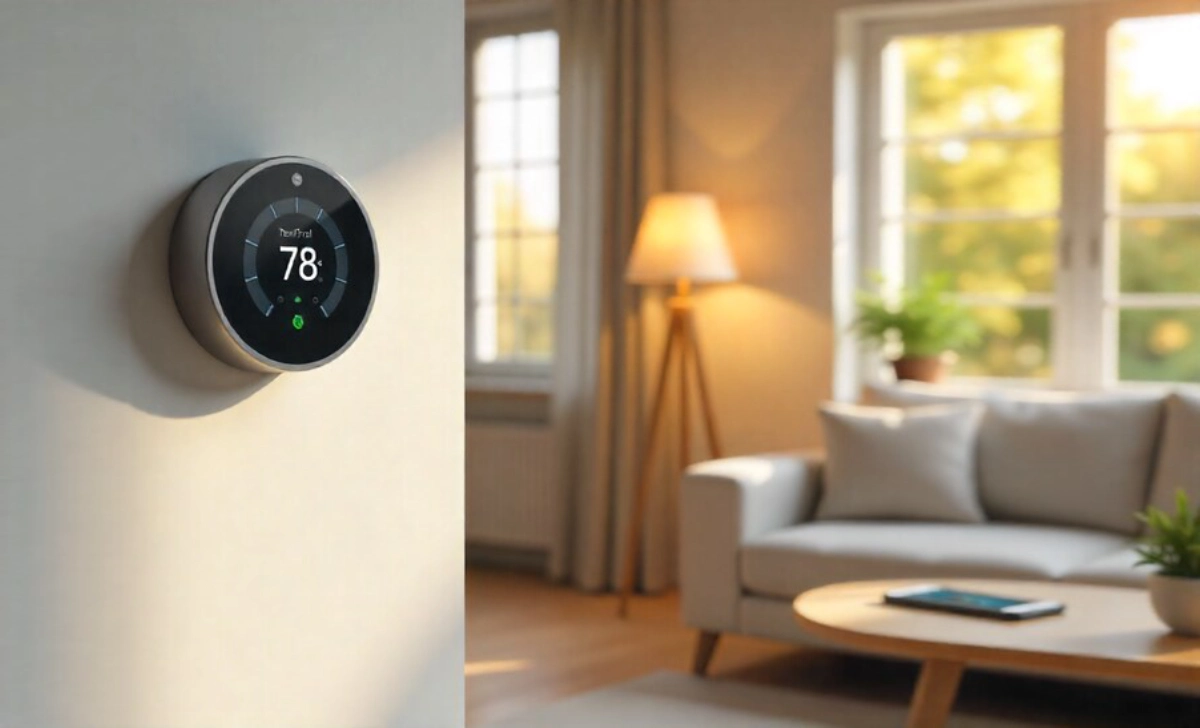
This is the upgrade that makes the most financial sense for most households. Smart thermostats like the Nest, Ecobee, or Honeywell Home models cost between $130 and $250. They replace your old thermostat and connect to your Wi-Fi.
Once installed, they learn your patterns. They know when you wake up, when you leave for work, and when you come home. They adjust the temperature automatically so you’re not wasting energy when no one’s around.
You can also control them remotely. Stuck at work late? Lower the heat from your phone. Coming home early? Warm things up before you walk in. This flexibility means you’re never paying to heat or cool a space.
Many utility companies offer rebates for installing smart thermostats. Check with yours before you buy. You might get $50 to $100 back, which brings the payback period down even further.
Switch to Smart Lighting
Traditional light bulbs waste energy and burn out quickly. Smart bulbs use LED technology, which lasts years longer and uses up to 75 percent less energy than incandescent bulbs.
But the real savings come from automation. You can set schedules so lights turn off automatically when you leave for work. Motion sensors ensure lights only come on when someone’s actually in the room. Dimming features let you use just the amount of light you need, not the full blast every time.
A smart bulb costs around $10 to $15. If you replace ten bulbs in your home, you’re looking at $100 to $150 upfront. Those bulbs could save you about $75 per year on electricity, and they’ll last at least 15 years. That’s over $1,000 in savings from a $150 investment.
You don’t have to replace every bulb at once. Start with the rooms you use most: the kitchen, living room, and bathrooms. Once you see the difference, you can expand from there.
Install Smart Power Strips
Phantom power is a silent budget drain. Devices like televisions, game consoles, and phone chargers pull electricity even when they’re turned off or fully charged. This standby power can account for 5 to 10 percent of your home’s energy use.
Smart power strips solve this. They detect when a device is in standby mode and cut the power completely. Some models have timers or remote controls so you can manage everything from one spot.
A good smart power strip costs between $20 and $40. If phantom power is costing you $100 a year, the strip pays for itself in a few months. After that, it’s pure savings.
Use them in your entertainment center, home office, and bedroom. Any area with multiple electronics benefits from this kind of control.
Upgrade to a Smart Water Heater Controller
Water heating is one of the biggest energy expenses in a home, often accounting for 15 to 20 percent of your utility bill. A smart water heater controller attaches to your existing water heater and gives you remote control over temperature and scheduling.
You can set it to heat water only during off-peak hours when electricity rates are lower. You can lower the temperature when you’re on vacation or adjust it based on how much hot water your household actually needs.
These controllers cost around $150 to $300. Depending on your usage, you could save 10 to 15 percent on water heating costs. For a household spending $500 yearly on water heating, that’s $50 to $75 in annual savings. The controller pays for itself in two to four years.
Add Smart Plugs for Appliances
Smart plugs are small adapters that sit between your outlet and your device. They let you turn anything on or off remotely, set schedules, and monitor energy use.
They’re especially useful for appliances that don’t need to run all the time: coffee makers, space heaters, fans, and chargers. You can set your coffee maker to start brewing ten minutes before your alarm goes off. You can make sure your space heater turns off after two hours, even if you forget.
Smart plugs cost $10 to $25 each. They’re one of the easiest smart home upgrades to install and afford because there’s no wiring involved. Just plug them in and connect them to your phone.
The savings come from eliminating wasted runtime and giving you better control over when devices use power. Over time, they help you spot which appliances are the biggest energy hogs so you can make smarter decisions.
Consider Smart Blinds or Shades
Windows are a major source of heat loss in winter and heat gain in summer. Smart blinds automatically adjust throughout the day to keep your home comfortable without overworking your heating and cooling system.
They open in the morning to let in natural light and warmth. They close in the afternoon to block harsh sun and keep rooms cooler. This passive climate control reduces the load on your HVAC system.
Smart blinds are a bigger investment, usually $200 to $400 per window. But they can reduce heating and cooling costs by up to 10 percent. In a home spending $1,500 yearly on climate control, that’s $150 in savings. The payback period is about two to three years per window.
Start with south-facing windows where sun exposure is strongest. You’ll see the most impact there before expanding to other rooms.
Track Your Energy Use
Most smart home devices come with apps that show you exactly how much energy you’re using and where. This visibility alone can lead to better habits.
When you see that your air conditioner accounts for 40 percent of your summer bill, you start thinking about ways to reduce that load. When you notice your dryer spikes your usage every evening, you might shift laundry to off-peak hours.
Some utility companies offer time-of-use rates, where electricity costs less during certain hours. Smart devices let you take full advantage of these programs by automatically shifting usage to cheaper times.
You don’t need to obsess over the data. Just check in once a month to see where you stand and look for patterns. Small adjustments based on real numbers can lead to significant savings.
How to Prioritize Your Upgrades
You don’t need to do everything at once. Start with the upgrades that match your biggest pain points.
If your energy bill spikes in summer and winter, go with a smart thermostat first. If you’re constantly leaving lights on, smart bulbs make the most sense. If you have a lot of electronics in standby mode, start with smart power strips.
Look at your utility bills from the past year. Identify where you’re spending the most. That’s where you’ll get the fastest return on your investment.
Also consider rebates and incentives. Many local governments and utility companies offer financial support for energy-efficient upgrades. These programs can cover 20 to 50 percent of your costs, making the payback period even shorter.
The Long Game
Smart home upgrades pay for themselves, but the timeline varies. A smart thermostat might break even in under a year. Smart blinds might take three years. The key is consistency. Once you install these devices, they keep working and keep saving without any extra effort from you.
Over five years, a handful of smart upgrades could save you $1,000 to $2,000 or more. That’s a vacation, an emergency fund cushion, or just breathing room in your monthly budget.
And the savings continue long after the devices have paid for themselves. A smart bulb that costs $12 and saves you $7 a year will keep saving you $7 every year for the next decade.
Start Small and Build
You don’t have to overhaul your entire home this weekend. Pick one upgrade that makes sense for your life right now. Install it. Use it. See how it feels.
Once you’re comfortable, add another. Then another. Smart home technology is designed to work together, so each new device integrates smoothly with what you already have.
The goal isn’t to have the most automated house on the block. It’s to create a home that works better for you, costs less to run, and gives you more control over your daily life. That’s worth far more than the sticker price. Start small with practical changes that save money and simplify your life.