





The right smart home upgrades save you real money, reduce daily friction, and give you control over your space without requiring you to replace everything you own. A smart thermostat alone can cut heating and cooling costs by 10–23% annually, and smart lighting eliminates the $200 most households waste each year on lights left running. These aren’t luxury purchases — they solve specific problems you already deal with every day.
You don’t need to automate your entire home to see results. Starting with three well-chosen devices — a smart thermostat, smart lighting, and a video doorbell — gives you measurable returns within the first year. From there, you build based on what frustrates you most, not on what’s trending. If you want a detailed breakdown before spending anything, this guide on how to choose smart home upgrades that truly save you money walks through the decision process room by room. The payoff is less stress, lower bills, and a home that works the way you need it to.
The Frustrations You Stop Noticing (Until You Fix Them)
You rush out the door, wondering if you left the lights on. You get home with arms full of groceries, fumbling for your keys in the dark. Your energy bill arrives and the number makes you wince.
None of these are dramatic problem. But they compound. They show up every day, drain small amounts of your time and money, and rarely get fixed because they feel too minor to address directly. Smart home devices solve exactly this category of problem — not crises, but the low-level friction that wears you down.
The question isn’t whether these upgrades are worth it. For most households, they are. The question is which ones solve your actual problems versus which ones just look useful in a product listing.
Lighting: Your Fastest Win
Smart bulbs and switches change how you use light without requiring you to rewire anything.
Install smart bulbs in the rooms you use most. You can dim them from your phone, set schedules, and turn them off remotely when you’re already halfway to work. A typical household wastes around $200 annually on lights left running in empty rooms. Smart lighting removes that cost almost entirely.
The habit changes are just as valuable as the savings. Set your bedroom lights to fade at 10 PM, and your body starts associating that dim shift with sleep. Program your kitchen to brighten at 6:30 AM on weekdays, and you stop squinting through your morning routine. These are small adjustments, but they run automatically once you set them.
Motion sensors belong in closets, bathrooms, and hallways. The lights turn on when you walk in and off when you leave. No switches, no waste, no forgetting. Some smart bulbs start at $10 each. Start with five in your highest-use areas and you’ll feel the difference within two weeks.
Your Thermostat Is Quietly Costing You
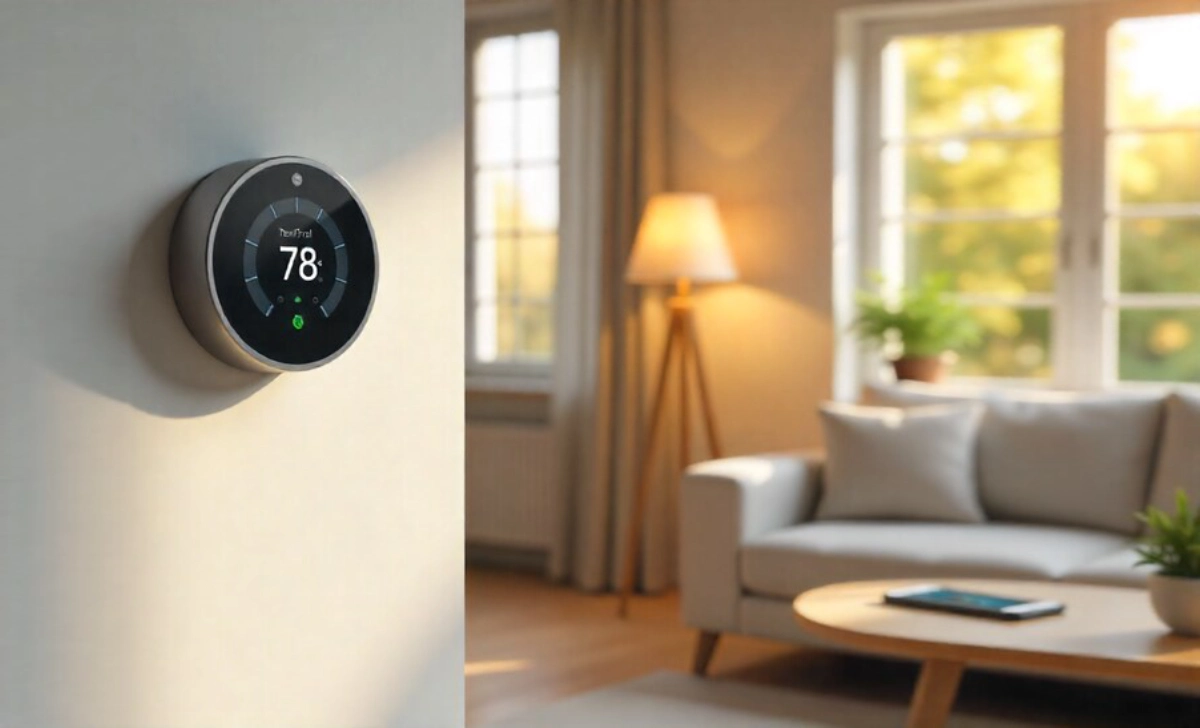
Heating and cooling account for roughly 48% of the average home energy bill. A smart thermostat addresses that number directly by learning your schedule and adjusting temperatures without your input.
You leave at 8 AM — the temperature shifts to save energy. You usually arrive home around 6 PM — the system starts adjusting 30 minutes before you walk through the door. You don’t think about it. You don’t touch it. It just handles itself.
Most households cut heating and cooling costs by 10–23% after installing a smart thermostat. For the average home, that’s $131 to $300 saved each year. Models from Nest or Ecobee run $100–250, and many utility companies offer rebates that cut that price further. Understanding how to make smart home upgrades pay for themselves often starts here — the thermostat is the clearest example of a device that covers its own cost within 12 months.
The remote access matters too. Forgot to turn down the heat before a weekend away? Fix it from your phone in the driveway. Coming home early from a trip? Set the temperature before you land. You’re never locked into whatever you set when you left.
Smart Plugs: The Overlooked Upgrade
You don’t need to replace your appliances to make them smarter. Smart plugs do that work for you.
Plug your coffee maker into a smart outlet and schedule it to brew five minutes before your alarm. Plug in a space heater and set it to turn off after two hours so you’re not lying in bed wondering if you remembered. Connect your window AC unit and cool the room before you get home instead of walking into a wall of heat.
Your TV, game console, and cable box draw power constantly, even when you’re not using them. This phantom energy costs the average household $100–200 per year. A smart power strip cuts power completely to devices in standby mode. Plug your entertainment setup into one, and when the TV goes off, everything else does too.
Smart plugs cost $8–25 each. Smart power strips run $20–40. Buy a few, test them on the devices that frustrate you most, and expand from there.
Security Without the Complexity
Someone rings your doorbell while you’re folding laundry upstairs. By the time you get downstairs, they’re gone. Was it a package? A neighbor? You have no idea.
Video doorbells solve this directly. You see who’s at your door from wherever you are, speak to delivery drivers without moving, and check on your front entrance while you’re across town. Basic models start around $50. Premium options run up to $200. Most connect to your existing smartphone and take 15–30 minutes to install.
The security value compounds over time. You have footage when packages go missing. You know when someone was at your door and what they did. You stop second-guessing whether you should have answered.
Smart locks solve a different but equally common problem. You’re carrying groceries, and your keys are buried in your bag. A smart lock lets you unlock the door from your phone as you approach, or opens automatically when your phone gets close. Give temporary access codes to a house sitter or repair technician, then delete the code when the job’s done. Decent models run $100–200 and eliminate a small daily annoyance that adds up to a meaningful amount of irritation over a year.
Safety Devices That Earn Their Place
Regular smoke detectors beep. If you’re not home or you’re sleeping in a far room, you might not hear them in time.
Smart smoke detectors send an alert to your phone the moment they trigger. You know immediately what’s happening and which room set off the alarm, whether you’re home or not. Smart water leak detectors work the same way — place them near water heaters, under sinks, or beside washing machines. If they detect moisture, you get a notification before a small leak becomes a flooded floor.
Water damage repairs average $3,000–$7,000, depending on the extent. A detector that costs $40–120 and catches the problem early changes that math entirely. When you’re thinking about which smart home upgrades are worth the money, safety devices consistently rank at the top — not because they’re convenient, but because they prevent expensive damage.
Smart Speakers: The Connector
Smart speakers like Amazon Echo or Google Home do more than stream music. They connect your other devices and let you control them without stopping what you’re doing.
Set a timer while your hands are covered in raw chicken. Add milk to your shopping list when you notice you’re out. Ask what the weather looks like before you choose what to wear. Tell the lights to turn off from bed instead of getting up to walk through the house.
Basic models start around $20–50. They work as the hub that ties your other devices together, which makes the whole system easier to use without a separate app for every device.
Where to Start
You don’t need to buy everything at once. Three upgrades cover the highest-return ground:
- A smart thermostat if energy bills are your main frustration
- Smart lighting if you constantly wonder what you left on
- A video doorbell if missed deliveries or front-door security bother you
Install those three, learn how they fit your routine, and add more when you’re ready. The goal is less friction, not more devices to manage.
What You Actually Get
Lower energy bills are the most measurable return, but they’re not the whole picture. You stop wasting mental energy on small tasks that repeat every day. You gain the ability to check on your home from anywhere, which removes a specific category of low-grade anxiety that most people carry without naming it.
The cumulative effect is a home that handles the routine so you don’t have to. Start with one upgrade this month. Watch how it changes your day. Then add the next one when you’re ready. Small changes compound when they happen every single day.