





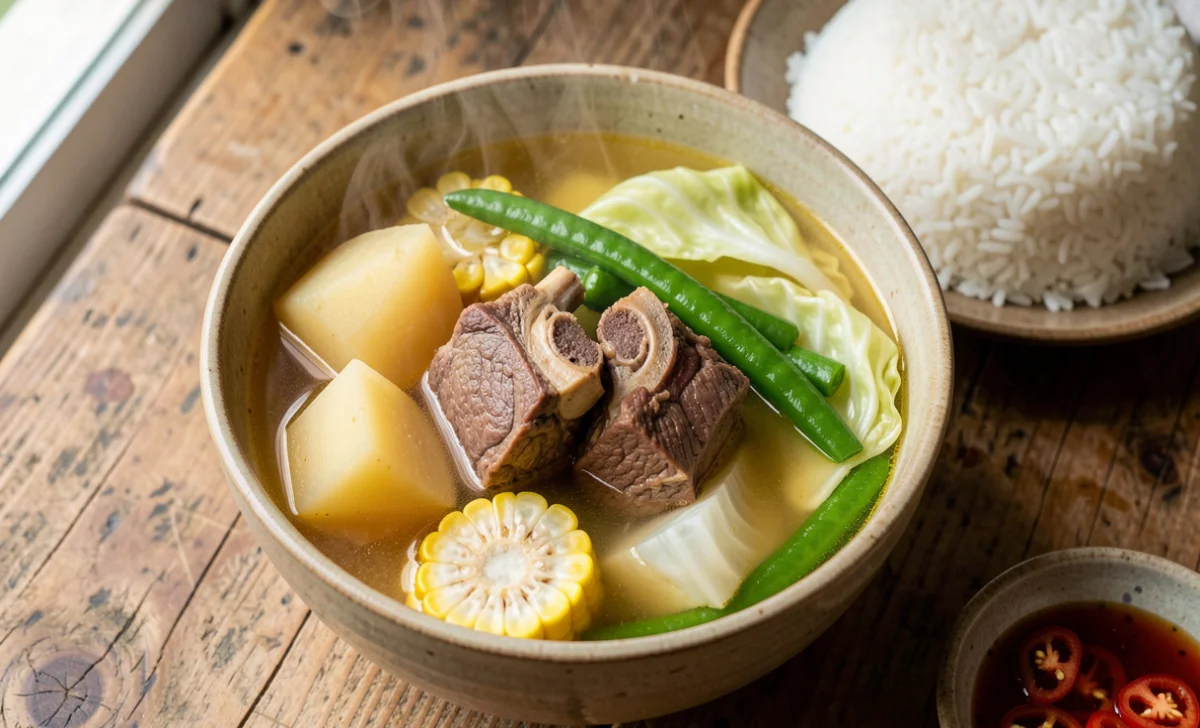
Nilagang baka is a classic Filipino beef soup made by slowly simmering bone-in beef with onion, whole peppercorns, and fish sauce until the broth is clear, golden, and deeply savory. Simple vegetables like potatoes, corn, cabbage, and green beans go in near the end so they stay fresh and tender. The name means “boiled beef,” but this dish delivers far more than that translation suggests.
This nilagang baka recipe walks you through every step, from picking the right cut of beef to keeping the broth clear and clean-tasting. You will also find full pressure cooker instructions, make-ahead tips, family variations, and a few nutritional tweaks for lighter servings.
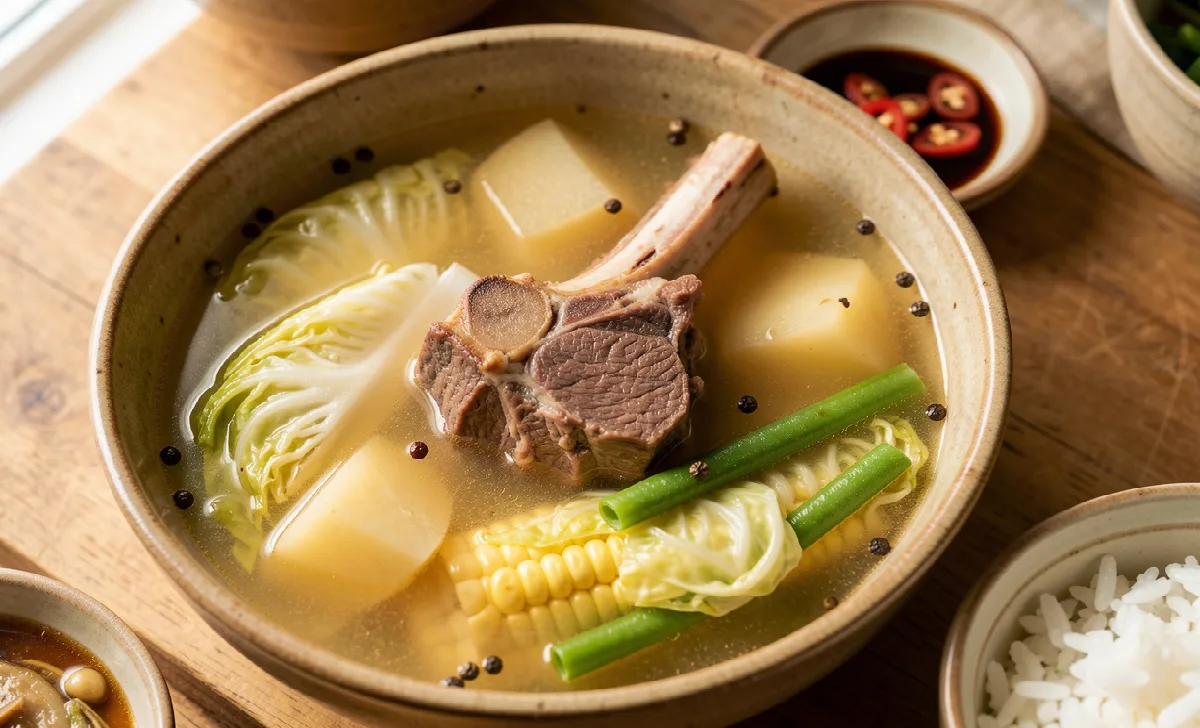
What Nilagang Baka Actually Is
On a cold or rainy evening, few things beat a bowl of Filipino beef soup. Nilagang baka is a clear, savory broth filled with tender beef and hearty vegetables. The name literally translates to “boiled beef,” but calling it that undersells it completely.
This is comfort food in its most honest form. No thick sauces, no complicated technique. Just good ingredients cooked with patience. The broth stays light but satisfying, and every spoonful feels balanced between the richness of the beef and the freshness of the vegetables.
It is also one of those recipes beginners can tackle without stress. If you enjoy warming soups like this hummus soup, you will appreciate how nilagang baka delivers the same slow, layered comfort with very little hands-on effort.
Best Cut of Beef for Beef Nilaga
The cut of beef you choose makes a real difference here. You want something with bone, connective tissue, or both. These are what turn a plain broth into something genuinely rich.
Beef shank is the classic choice and the one most Filipino cooks reach for first. The marrow in the bone melts into the broth as it simmers, giving it subtle depth that boneless cuts simply cannot match. The connective tissue also breaks down into collagen, leaving the broth slightly silky without feeling heavy.
Short ribs and bone-in chuck are solid alternatives. If you can only find boneless cuts, the soup will still taste good, but the broth will not be as full-flavored. In that case, a beef bouillon cube can help bridge the gap without overpowering the dish.
Nilagang Baka Ingredients
The ingredient list for authentic nilagang baka is short and straightforward. Here is what you need for four to six servings:
- 2 to 3 lbs bone-in beef shank, short ribs, or chuck with bone
- 8 to 10 cups of water
- 1 large onion, quartered
- 1 to 2 teaspoons whole black peppercorns, lightly cracked
- 2 to 3 tablespoons fish sauce (patis), plus more at the table
- 2 to 3 medium potatoes, peeled and cut into large chunks
- 2 ears of sweet corn, each cut into 3 to 4 pieces (optional but common in most homes)
- 1 small head of napa cabbage or regular cabbage, cut into wedges
- A handful of green beans, bok choy, or pechay
- Salt to taste
- Optional: 1 to 2 saba bananas (plantains), halved
The peppercorns deserve a separate mention. Use them whole and give them a light crack with the side of your knife before adding them to the pot. This releases more flavor than pre-ground pepper and adds gentle warmth to the broth without any sharp heat.
How to Make Nilagang Baka Step by Step
This recipe asks for very little active cooking. The stove does most of the work for you.
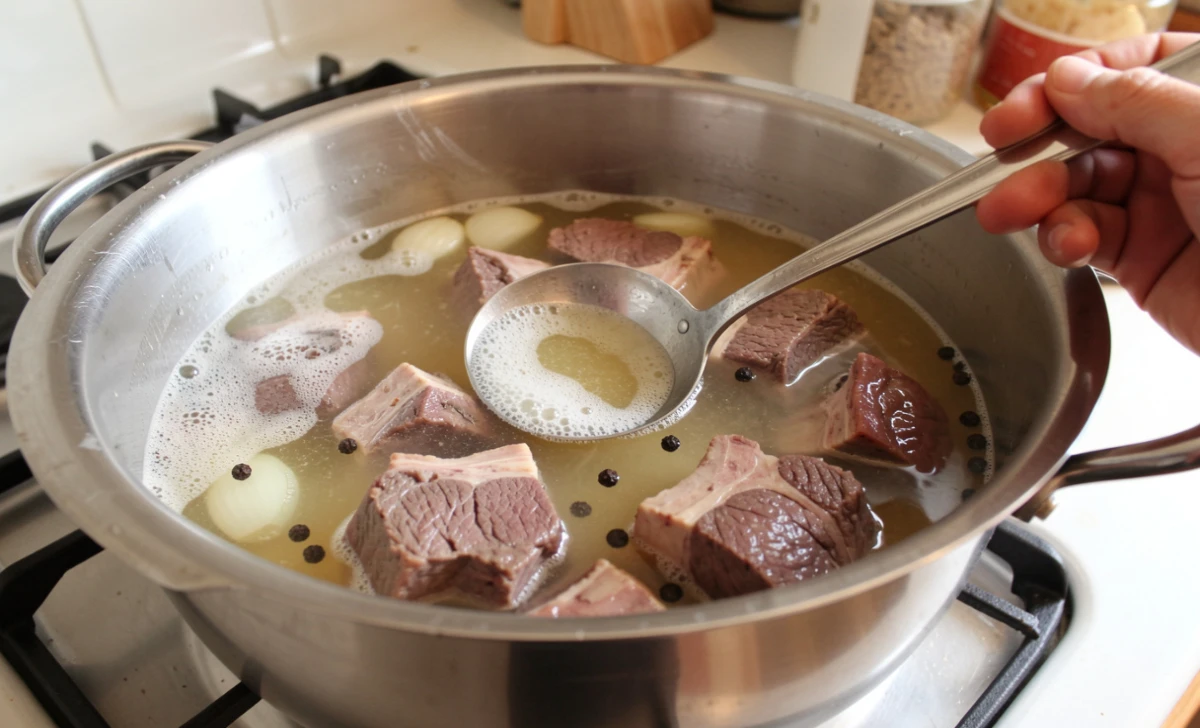
Step 1: Rinse and start the broth. Rinse the beef under cold water. Place it in a large pot, add the water, onion, and peppercorns. Bring everything to a boil over medium-high heat. As it boils, foam and scum will rise to the surface. Skim this off with a spoon for the first five to ten minutes. This step is what keeps the broth clear and clean-tasting.
Step 2: Simmer low and slow. Once the surface looks mostly clean, lower the heat. Add half the fish sauce, cover the pot partially, and let it simmer for 1.5 to 2.5 hours. The beef is ready when it is fork-tender and starting to pull away from the bone. Check occasionally and add more water if needed so the bones stay submerged.
Step 3: Season and add the dense vegetables. Taste the broth and adjust with more fish sauce or a pinch of salt. Add the potatoes and corn. Simmer for 10 to 15 minutes until the potatoes are nearly soft.
Step 4: Add the greens last. Toss in the cabbage and green beans. Cook for five to eight minutes more. You want them tender but not mushy. Bright color means they are still fresh-tasting.
Step 5: Rest and serve. Turn off the heat and let the soup sit for a few minutes before ladling it into deep bowls. Serve with steamed rice on the side. Put extra fish sauce and a wedge of calamansi or lemon on the table for squeezing over the meat.
How to Get a Clear Broth
A murky broth does not ruin the flavor, but a clear golden broth looks much better in the bowl and signals a well-made Filipino boiled beef soup. There are three ways to achieve it.
First, skim consistently. Stay close to the pot during the first boil and remove the foam as it rises. Most of it appears in the first ten minutes.
Second, blanch the beef before you start. Place the beef in a pot, cover with cold water, and bring it to a full boil for five minutes. Drain everything, rinse the beef and the pot, then start fresh with clean water. It adds a step, but the resulting broth is noticeably cleaner.
Third, keep the heat low throughout the long simmer. A rolling boil churns fat and solids back into the liquid and clouds it. A gentle simmer keeps everything separated and the broth bright.
Pressure Cooker and Instant Pot Method
If time is short, a pressure cooker works well for this dish. The beef gets just as tender, though the broth can be slightly cloudier than the stovetop version. Blanching the beef first helps minimize this.
Use the sauté function to bring the water, beef, onion, and peppercorns to a quick simmer. Skim any foam that appears. Lock the lid and pressure cook on high for 45 to 55 minutes. Do a natural pressure release for 15 minutes, then manually release the rest. Open the lid, add the fish sauce, then switch back to sauté mode. Add potatoes and corn and cook for ten minutes. Add cabbage and green beans for five more minutes, then serve.
The result is very close to the stovetop version, and the beef is often even more tender since pressure breaks down connective tissue faster. If you are curious about how other traditional recipes handle the choice between patience and shortcuts, this piece on whether fojatosgarto is hard to cook explores a similar tension in a different style of home cooking.
Nilagang Baka vs. Bulalo: What Is the Difference?
These two dishes look similar in the bowl, but they are not the same thing.
Nilagang baka is a general term for Filipino boiled beef soup. It works with various cuts of beef and always includes a mix of vegetables. It is the everyday version you find simmering in most Filipino kitchens.
Bulalo is a specific version made exclusively with beef shank and knuckle bones. The focus is the broth, which turns rich and almost gelatinous from the marrow and collagen. Bulalo takes longer to make and leans toward a special meal rather than a weeknight staple. Think of it as the more indulgent version of the same idea.
Family Variations Worth Trying
One of the best things about authentic nilagang baka is how flexible it is. Most Filipino families cook it slightly differently, and those small adjustments matter.
- Saba bananas (plantains): Adding one or two halved saba bananas along with the potatoes introduces a mild, starchy sweetness that balances the savory broth. It is a traditional touch that is worth trying if you can find it at an Asian grocery store.
- Corn as the star: Some households add two full ears of corn for a sweeter, lighter broth. Others skip it entirely if they prefer the beef flavors to stand alone.
- Pechay or bok choy instead of cabbage: Both leafy greens soften quickly and give the soup a slightly different texture. It usually comes down to what is in the fridge.
- Chili on the side: A small dish of fish sauce with fresh sliced chili lets everyone adjust the heat at the table without changing the base soup.
If you enjoy working with alternative proteins in similar slow-cooking preparations, the jade venison recipe follows a comparable low-and-slow method that produces tender, flavorful results in the same patient tradition.
Make-Ahead, Storage, and Reheating
Nilagang baka genuinely improves overnight. The broth deepens in flavor as it rests, and the beef becomes even more tender. If you are making it for a gathering, cooking it the day before is a smart move.
Store the soup in an airtight container in the refrigerator for up to three days. The fat will solidify on the surface when chilled. Skim it off before reheating for a lighter broth, or stir it back in for more richness.
To freeze, remove the potatoes before storing, since they turn grainy after thawing. Freeze the broth and beef together for up to two months. When you are ready to serve, reheat gently over medium-low heat and cook fresh vegetables directly in the broth.
Nutritional Notes and Lighter Tweaks
A standard serving of nilagang baka provides a solid balance of protein, vitamins, and minerals. The clear broth keeps the calorie count lower than creamy or oil-heavy soups. The vegetables contribute fiber, potassium, and vitamin C without adding much fat.
For a lighter version, choose leaner cuts like brisket or bone-in round instead of shank. After cooking, chill the broth and skim off the solidified fat before reheating. You can also increase the vegetable portions and reduce the beef per serving without losing the comforting quality of the dish. For a lower-sodium option, use less fish sauce during cooking and let people season their own bowls at the table.
Frequently Asked Questions
What is the difference between nilagang baka and bulalo?
Nilagang baka uses various beef cuts and is an everyday Filipino beef soup. Bulalo is made specifically with beef shank and marrow bones for a richer, more gelatinous broth. Both are boiled beef soups, but bulalo is the more indulgent, special-occasion version.
What is the best cut of beef for nilagang baka?
Beef shank is the top choice. The bone and connective tissue give the broth its depth and subtle richness. Short ribs and bone-in chuck are good alternatives. Avoid lean, boneless cuts if you can, since the broth will be noticeably thinner.
How do you get a clear broth for nilagang baka?
Skim the foam consistently during the first ten minutes of boiling, keep the heat at a gentle simmer throughout cooking, and consider blanching the beef in fresh water before starting. All three steps make a visible difference.
Can I make nilagang baka in a pressure cooker or Instant Pot?
Yes. Pressure cook on high for 45 to 55 minutes with a 15-minute natural release. Switch to sauté mode to add and cook the vegetables after opening the lid. Blanching the beef first gives you a cleaner-tasting broth even under pressure.
This recipe is based on common home preparations of nilagang baka shared across Filipino households. Results may vary depending on the cut of beef, cooking equipment, and personal taste preferences. Adjust fish sauce and seasoning to suit your own palate.