





When I first came across the word Brasssmile, I honestly didn’t know what to make of it. Sounds a bit bold, maybe even made up. But once I actually sat with the idea—and started connecting it to how I personally think about dental care—it made more sense than most advice I’d read before.
So let me be clear right upfront: Brasssmile is not a product. It’s not a brand. It’s a mindset shift—toward a healthy, confident smile you’re not afraid to show. That one sentence took me a while to find, but it’s the most honest way to describe it.
This guide covers what Brasssmile actually means, how it connects to real daily dental care, what changes you might notice, and how to get started—even if you’re busy, don’t have dental insurance, or just never thought much about your smile before.
No fluff. No pressure. Just what I’ve learned and what tends to work.
What Brasssmile Really Means
Think of “brass” for a moment. Not flashy. Not fake. Just solid, warm, and genuinely useful. That’s the feel behind Brasssmile.
It refers to a confident, healthy-looking smile that feels real—not forced, not overworked, not compared to a filtered photo. It flips the usual script. Most people chase Hollywood-white, perfectly aligned teeth. Brasssmile says: ” Your smile has character, and keeping it healthy is what actually makes it worth showing.
Old mindset vs. Brasssmile mindset:
| Old Approach | Brasssmile Approach |
|---|---|
| Hide your smile | Show it without thinking twice |
| Brush out of habit or guilt | Brush because your smile matters to you |
| Compare your teeth to others | Compare only to your past self |
| Fix what looks wrong | Maintain what’s already working |
I used to cover my mouth in photos. Not because my teeth were terrible—but because I’d convinced myself they weren’t good enough. The Brasssmile idea didn’t give me better teeth. It gave me a better reason to take care of the ones I already had.
If you’re curious about how small mindset shifts like this show up in other parts of health, this article on stress and physical signals is worth a few minutes—it connects closely to how we treat (or ignore) our own wellbeing.
How Brasssmile Changes the Way You Think About Dental Care
The standard dental advice hasn’t changed much in decades: brush, floss, rinse, see your dentist. That’s all still true. But most people don’t stick with it—not because they’re lazy, but because it feels disconnected from anything they actually care about.
The American Dental Association flagged in 2025 that nearly 40% of adults don’t brush as consistently as they should. I believe it. When something feels like a chore with no visible payoff, it’s easy to skip.
Brasssmile shifts the focus. Instead of “I have to brush,” it becomes “I want to, because I actually like what I’m maintaining.” It’s a small change in framing, but it sticks differently.
Here’s a quick example: I have a friend who used to laugh with her hand over her mouth—every time, without thinking. She had a small gap between her front teeth and had decided it was a flaw. After about six months of just caring for her teeth consistently—and stopping the comparison habit—she stopped covering her mouth. No dental work. No whitening kit. Just a shift in how she saw herself.
That’s the real change Brasssmile makes possible.
Real Benefits of a Brasssmile Approach
Let’s get into what actually changes when you take this approach seriously.
- You stop chasing perfection. That alone takes a quiet weight off. You’re not comparing yourself to veneers or filters anymore.
- Daily routines feel lighter. You still brush and floss—but now it’s connected to something positive, not just fear of cavities.
- Confidence shows before your teeth do. People notice how you carry yourself before they notice the shape of your smile.
- Fewer visits that feel like emergencies. When you maintain consistently, you catch small things early instead of dealing with bigger problems later.
The longer-term picture matters too. In three to five years, a person who builds steady Brasssmile habits tends to spend less on whitening treatments that fade quickly, deal with fewer cavities, and feel less anxious walking into a dental office—because they’re maintaining, not repairing.
One honest note: some dentists point out that leaning too hard into the feeling of your smile can cause people to overlook real clinical issues—gum disease, enamel wear, and infections. They’re right to flag it. Brasssmile is the why behind good habits, not a reason to skip the what. You still need fluoride. You still need checkups.
What you eat and drink also plays a larger role than most people realise. Simple nutrition choices—staying hydrated, cutting back on sugar and acidic drinks—directly protect your enamel and gum health. This piece on everyday nutrition for immunity touches on food habits that support your whole body, including your mouth.
Daily Dental Care for a Brasssmile (That Actually Works)
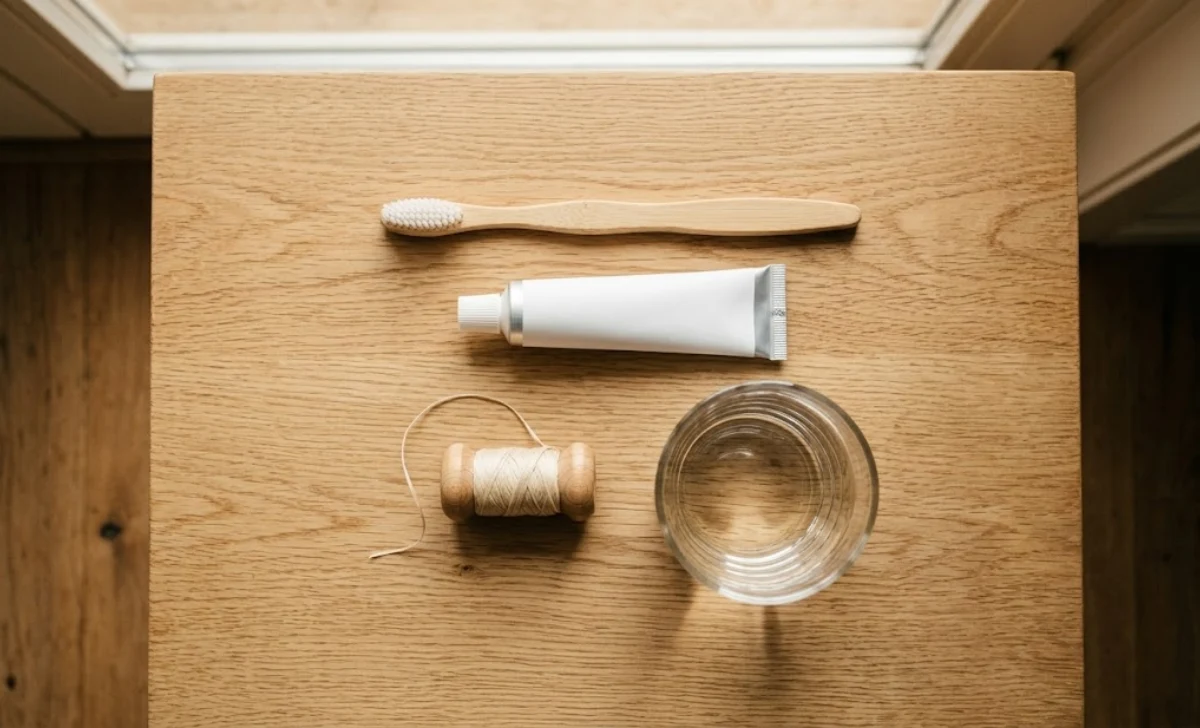
You don’t need a shelf full of products. Here’s what I’ve found actually makes a difference—and what’s easy enough to keep up with long-term.
Start here tomorrow (two simple things):
- Brush for two full minutes while a song plays in the background. Don’t rush it.
- Floss one spot that bothers you—just one. Build from there.
That’s genuinely enough to start.
The rest of the basics:
- Brush gently, twice a day. Hard brushing wears down enamel and actually makes teeth look more yellow over time. Soft bristles, small circular motions.
- Floss where you feel stuck food. Even once a day matters. Focus on the spots that bother you.
- Use a basic fluoride toothpaste. Save whitening pastes for occasional use—they can be abrasive if overused.
- Drink water after coffee or tea. This single habit cuts surface stains more than most people expect.
- See a dentist at least once a year. If cost or insurance is a barrier, look into dental schools in your area—they offer quality care at a fraction of the price. Once a year, done properly, is miles better than nothing.
No expensive gadget required. No complicated kit. Brasssmile doesn’t ask for much—just consistency.
Where this leads in 3–5 years:
- Less money on whitening treatments that don’t last
- Fewer cavities from staying on top of the basics
- Lower dental anxiety (you’re maintaining, not reacting)
- A smile that looks better with age, not worse from over-treatment
Most people don’t think five years ahead when it comes to their teeth. The ones who do are usually glad they started early—even if “early” was just last Tuesday.
For a broader look at how small wellness habits compound over time, this related read connects the dots in a useful way.
Final Take: Why Brasssmile Sticks
After sitting with this idea for a while, I realised I’d already been living a version of it—just without a name for it. I used to hide my smile in photos. I don’t anymore. My teeth aren’t perfect. They’re clean, they’re healthy, and they’re mine.
That’s the real shift Brasssmile offers. Not a product. Not a procedure. Just a quieter, steadier way of showing up.
So before you close this page, try this: look at your smile in a mirror for five seconds. Don’t judge it. Don’t compare it. Just notice it. That’s the first step—and honestly, for most people, it’s the hardest one.
Take care of your smile like it already belongs to someone you respect. Because it does.
FAQs
Is Brasssmile a real dental product or brand?
No, not in this context. Some small brands have used the name, but here it refers to a mindset and approach to dental care. You don’t buy it. You practice it.
Do I need straight or white teeth to have a Brasssmile?
Not at all. Some of the most genuine Brasssmiles I’ve seen have gaps, chips, or slight overlaps. Health and confidence carry more weight than alignment.
How is this different from regular dental advice?
Standard dental advice tells you what to do. Brasssmile gives you a reason why that actually connects to how you feel about yourself, which makes sticking to those habits much easier.
What if I have missing teeth, dentures, or implants?
This approach still applies. Whatever your current dental situation, caring for what you have—and feeling good about it—is the whole point. Talk to your dentist about what routines work best for your specific setup.
Can I still do whitening or cosmetic work?
Absolutely. Brasssmile doesn’t argue against cosmetic dentistry. It just says: don’t let cosmetic work replace the basics. Whiten if you want—just keep brushing and flossing, non-negotiable.
What if I have gum problems or pain?
See a dentist first. Brasssmile is for maintenance and mindset, not for ignoring things that need real clinical attention.
Disclaimer: This article is for informational purposes only and does not replace professional dental advice. If you have specific dental concerns, pain, or gum issues, please consult a licensed dentist.