




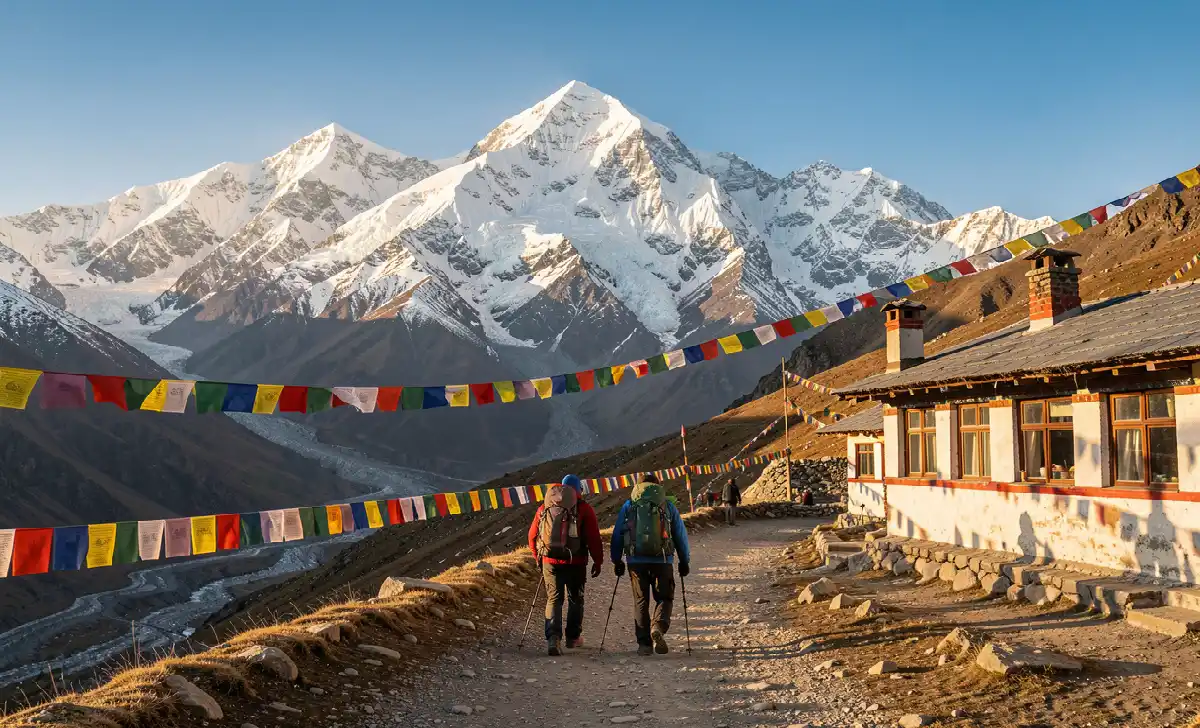
You’ve seen the photos. You’ve thought about it for years. Now you’re finally asking: how much does the Everest Base Camp trek actually cost? It’s a question with no single clean answer, and that’s exactly why this guide exists.
Prices you’ll find online range from shockingly cheap to eye-wateringly high. The real number depends on how you travel, what you’re willing to trade, and how much cushion you want for surprises. In my experience, most trekkers underestimate at least one major cost category before they land in Kathmandu.
The Everest Base Camp trek cost typically runs between $1,500 and $5,000 USD per person, depending on your travel style, the season you choose, and whether you go with a guided package or organize it yourself. Your biggest expenses are the Lukla flight (around $350 to $450 round-trip), guide and porter fees, teahouse accommodation and food, permits (roughly $50 to $60 total), and travel insurance with high-altitude evacuation cover.
Budget trekkers who go independent and keep it basic can come in under $1,500. Most people using a local guided package spend $2,000 to $3,500, covering everything from Kathmandu. Add gear, tips, and a few days in Kathmandu before or after, and you have your real number. Plan for more than you think you’ll need, because the trail has a way of surprising you.
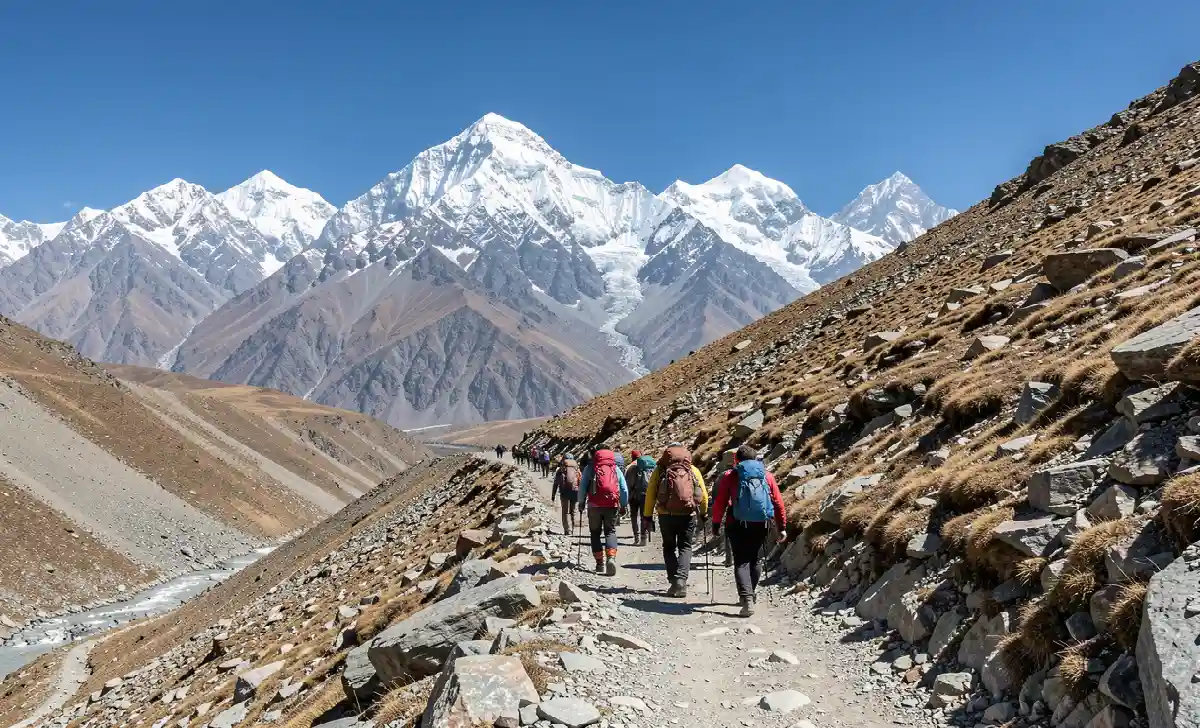
What Goes Into the Everest Base Camp Trek Cost
Before you look at any numbers, it helps to understand what you’re actually paying for. The Everest Base Camp trek cost isn’t one lump sum. It’s made up of several distinct categories, each with its own range depending on your choices.
The main buckets are flights, permits, guide and porter fees, food and lodging on the trail, gear and insurance, and Kathmandu costs before and after. Some of these are fixed. Others shift based on when you go, how you book, and how much comfort you want.
For many trekkers, this trip is also a form of intentional, experience-first travel. If you’re drawn to wellness travel and meaningful global experiences, the EBC trail delivers on both fronts. That said, it requires real financial preparation, not just a rough estimate.
The Biggest Expenses: Flights, Permits, and Guides
These three categories will take up the largest share of your EBC trek budget.
The domestic flight from Kathmandu to Lukla is the most notorious expense on the list. Round-trip, expect to pay $350 to $450 USD per person through a local agency. During peak season, it goes higher. Weather delays are common in the Khumbu region, so build in at least one buffer day in Kathmandu for each direction. Missing a flight and rebooking last minute is expensive and stressful.
Permits are comparatively simple. You need the Sagarmatha National Park entry fee (around $30) and the Khumbu Pasang Lhamu Rural Municipality fee (about $20). Total permit costs sit at roughly $50 to $60 per person. Keep them in your pack because rangers check them on the trail.
Guides are where opinions split. You’re technically not required to have one, but for first-time trekkers, altitude makes navigation and decision-making harder than expected. A guide costs $25 to $40 per day; a porter runs $20 to $30 per day. Over a 12 to 14-day trek, that’s $300 to $600 each, which drops further if you’re sharing with a small group. Some trekkers choose to extend their time in the region with additional objectives like climbing Lobuche Peak, where having an experienced guide becomes even more essential.
What You’ll Spend Each Day on the Trail
Daily costs on the EBC trail are predictable once you understand the pattern: the higher you go, the more everything costs.
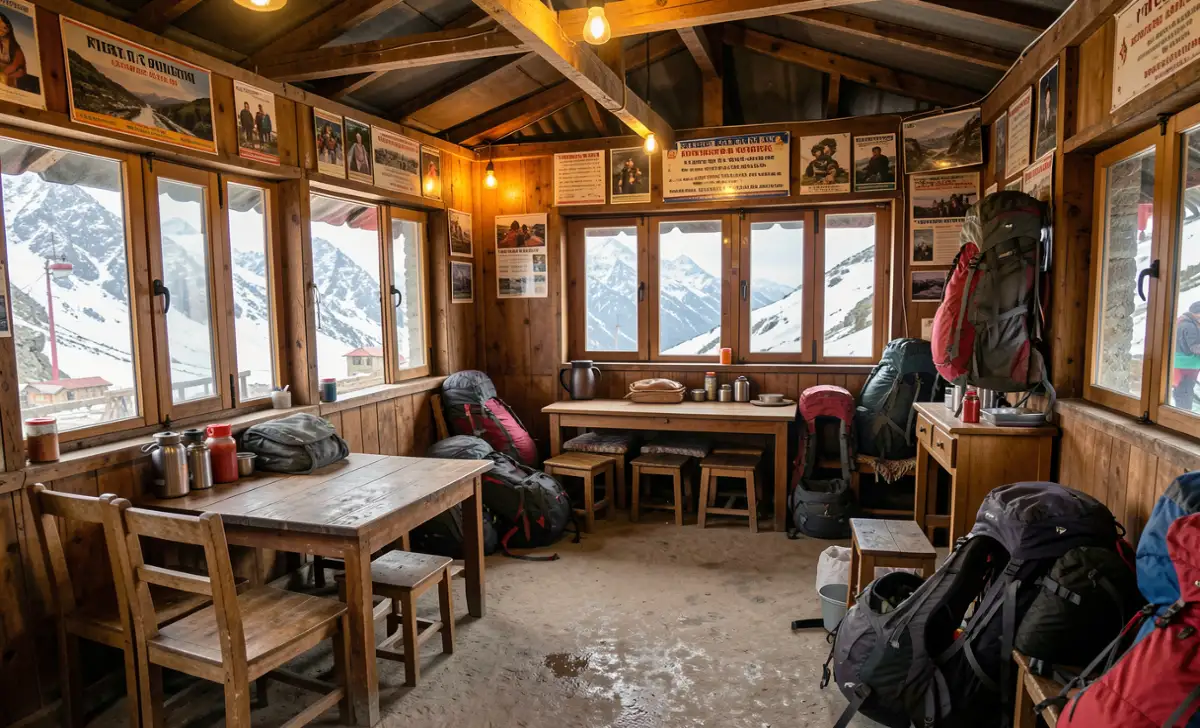
Teahouses charge $5 to $15 per night for a basic room. Most of them expect you to eat meals there, which partly offsets the room cost. Dal bhat is the staple dish and the best value on the menu at $5 to $9, depending on altitude. Breakfast and dinner together will run you $20 to $40 per day in total. At elevations above Namche Bazaar, prices climb because everything gets carried or flown in.
A realistic daily budget for food and lodging on the EBC trail is $30 to $55 per person, inclusive of basic meals, a bed, and a few small extras like charging your devices ($2 to $4 per hour) or a hot shower ($4 to $6 each time). Wi-Fi exists in most teahouses but costs $3 to $5 per device and runs slowly above lower elevations.
Water adds up faster than most people expect. Bottled water costs $3 to $5 per bottle on the trail. A reusable bottle with purification tablets or a SteriPen saves you money and reduces plastic waste.
How the Season Changes What You Pay
Timing your trek affects more than just views. It directly shapes your Everest trekking expenses.
Peak seasons are spring (March through May) and autumn (October through November). Trails are busy, skies are clearer, and everything costs more: flights fill fast, teahouses charge higher rates, and agencies quote premium prices. This is when most trekkers go, and the infrastructure shows it.
Off-peak travel, particularly June through August during monsoon season, brings lower costs for lodging and sometimes guides, but the weather is wetter, and views are often obscured by cloud cover. Winter (December through February) offers solitude and crisp air, but cold nights above Dingboche are serious, and some high-altitude teahouses close.
If you’re comparing the EBC trek to other travel options for value, it’s worth thinking through your overall travel budget. A destination like Mongibello might offer a very different kind of adventure at a different price point, which can help you frame what you’re willing to invest for each type of experience.
The sweet spot for value without suffering through bad weather is late October or early November: the crowds thin slightly after the October rush, temperatures are cold but manageable, and prices can be 10 to 15 percent lower than the April peak.
Hidden Costs Most Trekkers Overlook
This is where the surprises happen. Your EBC trek budget should include a buffer of at least 15 to 20 percent beyond your planned total.
Gear is the first place people get caught out. If you already own sturdy boots, a down jacket, and waterproof layers, you’re ahead. If not, buying quality gear adds $200 to $500 before you’ve left home. Renting in Kathmandu is an option: down jackets and sleeping bags run $1 to $3 per day. Over two weeks, that’s $40 to $60 per item.
Travel insurance with high-altitude evacuation cover is non-negotiable. A helicopter evacuation from the Khumbu region can cost $3,000 to $5,000 without coverage. Policies that cover trekking up to 5,500 meters run $80 to $200 for a two-week trip. Do not skip this.
Tips for your guide and porter are expected and deserved. A standard tip for a guide over a 12 to 14-day trek is $100 to $150. For a porter, plan on $60 to $100. This is a meaningful part of their income.
International visitors starting outside Nepal also need to factor in visa fees ($30 to $100 depending on duration), international flights to Kathmandu, and two to three nights of Kathmandu accommodation before and after the trek ($30 to $80 per night for a comfortable guesthouse).
Three Realistic Budget Tiers
Here’s how the cost to trek to Everest Base Camp breaks down across different travel styles, based on what trekkers typically report spending.
Budget trekker: $1,200 to $1,800 You handle permits yourself, share a guide with a group or go porter-only, eat simple meals, and skip the extras. This is doable if you’re experienced, fit, and prepared for basic conditions. It requires careful planning and assumes no major weather delays.
Standard guided package: $2,000 to $3,500. Most people fall here. You book with a reputable local Nepali agency. The package covers your guide, porter, flights, permits, three meals per day, and teahouse accommodation. Group sizes of four to eight keep per-person costs manageable. This tier offers enough support to genuinely enjoy the journey rather than just survive it.
Comfort or premium: $3,500 to $6,000+ Private guides, upgraded lodges, extra acclimatization days, and helicopter return to Kathmandu. Some trekkers with limited time or altitude sensitivity find this tier worth every rupee. Premium international operators sit at the top of this range.
FAQs
What are the biggest expenses in an Everest Base Camp trek?
The domestic flight to Lukla ($350 to $450 round-trip) and guide or porter fees ($300 to $600 total) are the two highest variable costs. Travel insurance and gear can add another $300 to $700 if you’re starting from scratch.
How can I reduce the cost of my EBC trek without cutting safety?
Book with a local Nepali agency instead of an international operator. Travel in a small group to share guide and porter costs. Go in late October or early November for slightly lower prices without sacrificing weather. Rent gear in Kathmandu rather than buying everything new. Carry your own snacks from lower elevations to avoid peak-altitude pricing.
Does the Everest Base Camp trek cost change by season?
Yes, noticeably. Spring and peak autumn months carry higher prices for flights, guides, and lodging. Monsoon season (June to August) brings lower costs but wetter conditions and fewer views. Off-season travel can save 10 to 20 percent, but it comes with trade-offs.
What’s a realistic daily budget for food and lodging on the EBC trail?
Plan for $30 to $55 per day per person for a bed, three meals, and basic extras like charging your phone or using Wi-Fi. Below Namche Bazaar, it stays closer to $30; above Dingboche, it can push past $50 depending on what you order and how many extras you use.
Is $3,000 enough for the full EBC trek?
Yes, for most people. At $3,000, you can cover a solid local guided package from Kathmandu, including flights, permits, food, lodging, and insurance, with a small buffer left for tips and extras. If you’re flying internationally into Kathmandu, factor that cost in separately.
Disclaimer: Prices in this article reflect general 2025 to 2026 ranges based on widely reported trekker and agency data. Costs vary by agency, group size, season, and individual spending habits. Always verify current permit fees, flight prices, and insurance requirements directly with providers before booking your trip.