





Content marketing is the practice of creating and sharing useful content, such as blog posts, videos, or newsletters, to attract and build trust with your audience over time. Instead of pushing a product at people, you answer their questions, solve real problems, and show up consistently. That trust eventually turns into customers.
It works because people are tired of ads. When someone finds content that genuinely helps them, they remember where it came from. Over months and years, that familiarity builds loyalty that paid advertising rarely achieves on its own.

Content Marketing for Beginners: What It Is and How to Get Started
Most people hear “content marketing” and assume it means running a blog or posting on social media. It is those things, but the idea behind it is much simpler and older than the Internet. Before digital tools existed, a hardware store owner ran free Saturday workshops on home repairs. A baker handed out recipes that called for their special flour. They were not being generous for no reason. They were building trust before asking for a sale.
Content marketing works the same way. You share something useful, people trust you more, and when they need what you offer, they come to you first.
What Content Marketing Actually Is
Content marketing means creating and sharing material, like articles, videos, emails, or guides, that genuinely help your audience. You are not pitching your product in every sentence. You are solving a problem or answering a question someone already has.
The Content Marketing Institute has described it this way for years: it is a strategic approach focused on creating valuable, relevant content to attract a specific audience and drive profitable action. What that means in practice is simpler than it sounds. You think about what your ideal customer is searching for, and you create something that answers it well.
In my experience, the moment that clicked for most small business owners I have worked with was when they stopped asking “what should I post?” and started asking “what does my customer need to know right now?” That shift changes everything.
One fair point worth raising: content marketing is not a replacement for every other approach. In some industries, like high-pressure B2B sales or impulse purchases, outbound advertising still drives quick results. But even then, good content often warms people up before a conversation ever starts.
How It Differs from Traditional Advertising
Traditional advertising interrupts. A billboard, a pre-roll ad, a pop-up: these stop you from what you were doing and push a message in your face. The goal is immediate attention, usually for a product.
Content marketing pulls people in. You show up when they are already looking for help. They find your article through a search, watch your video because it answers something they were stuck on, or subscribe to your newsletter because it consistently saves them time. There is no interruption because they chose to engage.
Here is a simple way to think about it. Traditional advertising asks: “What can I sell you?” Content marketing asks: “What problem can I help you solve?” One is a transaction. The other is a relationship.
Understanding where content fits into your broader approach, including how it connects to your sales process and team goals, makes it far more effective. A clear management guide can help you align your content efforts with bigger business objectives so nothing gets created in a vacuum.
Types of Content Marketing Worth Knowing
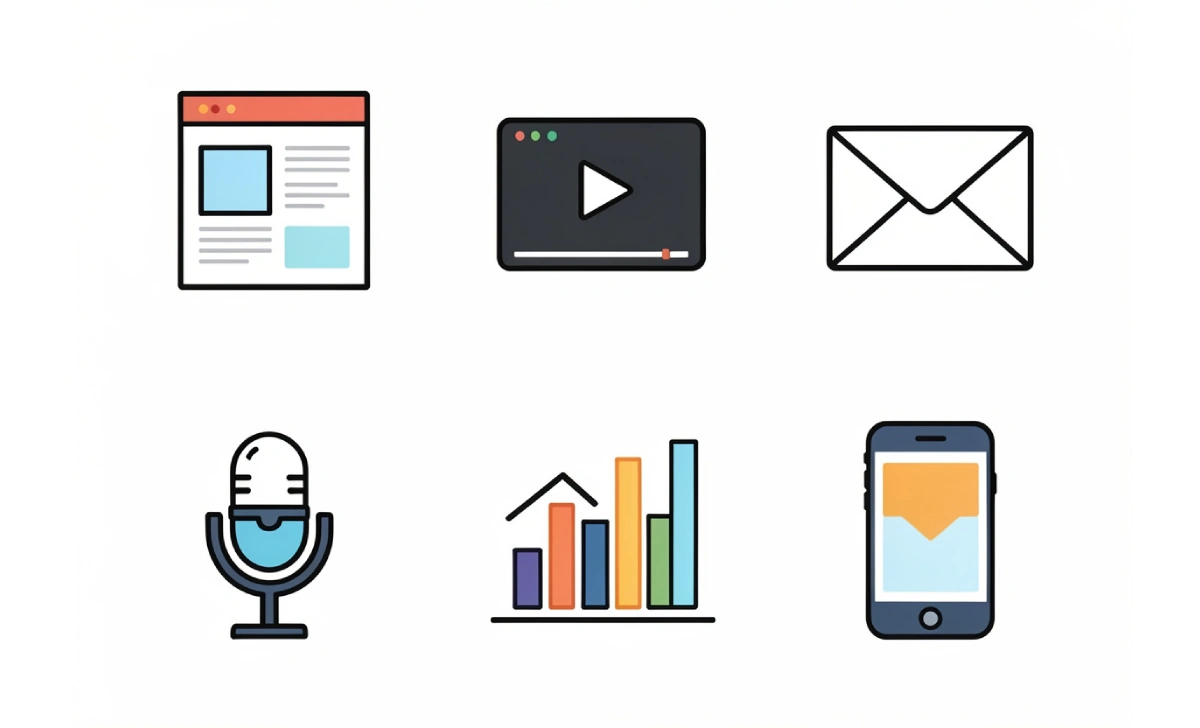
Content is not one thing. It takes many forms, and the right format depends on where your audience spends time and what you are good at creating.
- Blog posts and articles: These are reliable for search visibility and explaining ideas in depth. A well-written how-to post can bring in readers for years after you publish it.
- Short-form video: Platforms like YouTube Shorts, Instagram Reels, and TikTok have made short video the highest-engagement format right now. It builds personality quickly and reaches people who do not like reading.
- Email newsletters: A direct line to people who already trust you enough to share their inbox. Done well, newsletters build some of the most loyal audiences in any medium.
- Guides and ebooks: These go deep on a topic and work well for capturing email leads. You offer the guide for free in exchange for an email address, and the reader gets real value.
- Infographics: Useful when you are explaining a process or presenting data. They get shared more easily than plain text.
- Podcasts: These invite you into people’s daily routines, whether that is a commute, a workout, or a chore. Loyalty from podcast listeners tends to run deep.
- Social media posts: These keep you visible between bigger content pieces. They are conversation starters, not the whole conversation.
Start with one or two formats you feel comfortable with. I started with articles because writing came naturally. Video came later, once I had a clearer sense of what my audience wanted to see.
Once you get traction, think about how content feeds into your other marketing channels. Email, social, and your website work better together than they do in isolation. A well-built marketing funnel with the right automation can help you move people from first contact to loyal customer without dropping the ball between steps.
Benefits of Content Marketing
The most obvious benefit is visibility. Content that ranks in search engines keeps working long after you publish it. A single blog post written three years ago can still bring in traffic today.
But the deeper benefit is trust. People who find you through genuinely useful content arrive with a different mindset than people who clicked a paid ad. They already believe you know what you are talking about. That makes every conversation easier, from a first email to a sales call.
For small businesses, especially, the return can outpace bigger competitors over time. Large companies can outspend you on ads. They cannot always outpace you on honesty, personal tone, or specific expertise. Content is where the playing field levels out.
That said, the landscape is changing. AI-generated search summaries are becoming more common, and zero-click results mean some users find their answer without ever visiting your site. The brands that will stand out in that environment are the ones with clear points of view, original experience, and content that goes deeper than a surface-level answer. Planning for those shifts now means you will not be scrambling later. Understanding how predictive tools can improve your marketing strategy is one way to stay ahead of those trends without guessing.
How to Start Content Marketing Today
The most common mistake beginners make is trying to do everything at once. They launch a blog, a YouTube channel, and three social accounts in the same week, burn out within a month, and abandon all of it.
Start smaller. Here is a practical path that actually works.
- Identify one question your customers ask you repeatedly. The one you answer over and over in emails, calls, or conversations.
- Answer that question in public. Write a short post. Record a two-minute video on your phone. It does not need to be polished.
- Post it somewhere your audience already goes: your website, LinkedIn, YouTube, wherever it fits.
- Watch what happens. Did people share it? Ask follow-up questions? That feedback tells you what to create next.
- Repeat consistently. Weekly is great. Monthly is fine. Stopping after two posts is not.
On tools: you do not need to spend money to start. Google Docs, Canva, and your phone camera are enough. Free versions of scheduling tools like Buffer or later can handle social posting. Paid tools make sense once you have a clear content process and audience. Do not buy them first.
A quick note on AI writing tools: they are useful for brainstorming, outlining, and working past a blank page. Many marketers use them regularly. But relying on them entirely produces generic content that blends in with everything else online. Your real experience, specific examples, and honest opinions are what make content worth reading. Use AI to speed up the process, not to replace your perspective.
Frequently Asked Questions
What is the difference between content marketing and traditional advertising?
Traditional advertising interrupts people with a direct message about a product. Content marketing earns attention by helping people with something they already need. One pushes; the other pulls.
How much does content marketing cost for a small business?
It can cost very little to start. A blog on your own website, a free Canva account, and consistent time are enough to begin. Costs grow if you hire writers, invest in video production, or use paid distribution tools. Even then, the long-term cost per customer tends to be lower than paid advertising because good content keeps working after you publish it.
What are some real-world examples of successful content marketing?
A local accountant who writes plain-language explainers on tax rules for freelancers. A plumber who posts short videos showing homeowners how to prevent common pipe issues. A yoga studio that sends a weekly newsletter with simple breathing exercises. None of these is glamorous, but all of them build trust with exactly the right audience.
How do I measure if my content marketing is working?
Start with a few basic signals: organic traffic to your site, time spent on page, social shares, and email sign-ups. Over time, track which content pieces lead to actual inquiries or purchases. Vanity metrics like follower counts matter less than whether people are taking action after engaging with your content.
Disclaimer: This article is intended for general informational purposes only. Results from content marketing vary based on industry, consistency, audience, and execution. No specific outcomes are guaranteed.