




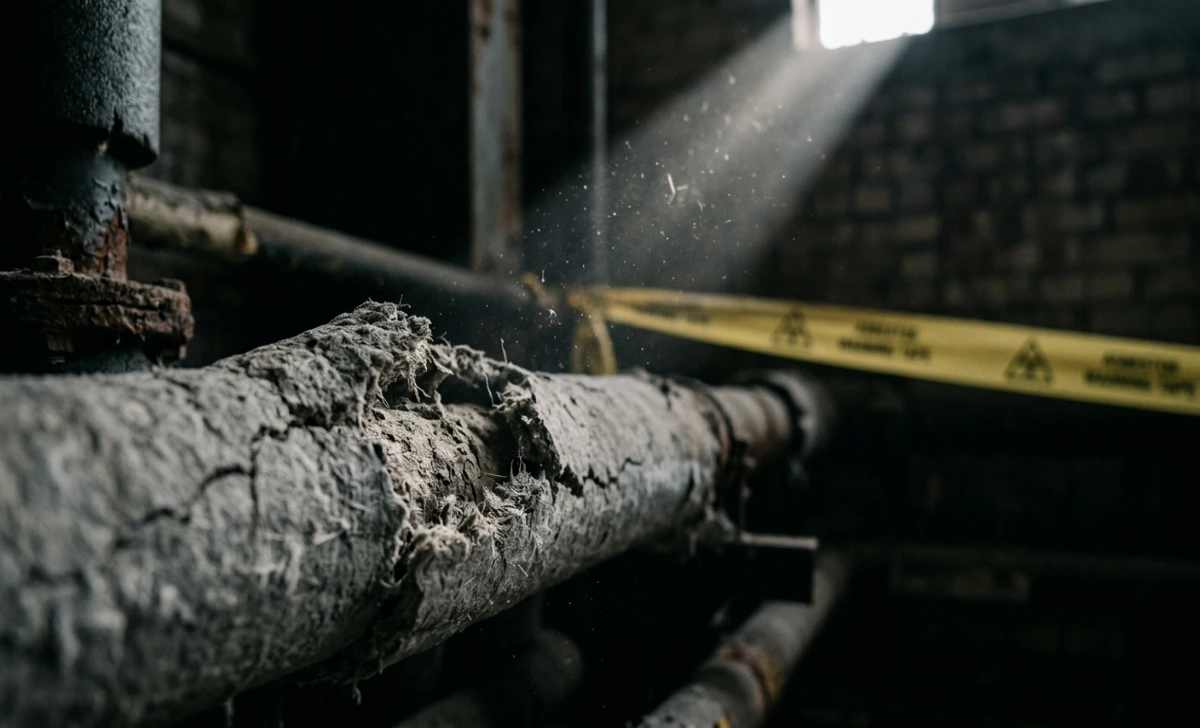
Asbestlint refers to microscopic asbestos fibres released into the air when asbestos-containing materials deteriorate or are disturbed. These nearly invisible particles can remain suspended for hours, travel through ventilation systems, and — once inhaled — cause serious, life-altering diseases including mesothelioma, asbestosis, and lung cancer.
What Is Asbestlint?
Asbestlint is a term built from two words: asbest (the Dutch and German word for asbestos) and lint, meaning fine fibrous material. In everyday conversation, it is used to describe one of three closely related things — and understanding the distinction matters.
The Three Forms of Asbestlint
1. Asbestos warning tape — A brightly colored barrier tape printed with asbestos hazard warnings. Commonly used on construction and demolition sites across Europe and parts of Asia. The tape itself does not contain asbestos and poses no direct health risk. Its purpose is to mark off zones where asbestos exposure risk exists.
2. Asbestos insulation tape or cloth — A woven or pressed strip made directly from asbestos fibres. Historically used to wrap pipes, seal boiler joints, insulate ducts, and protect electrical cables from heat. This is the physical material that was manufactured and installed in buildings and machinery across the 20th century.
3. Airborne asbestos fibre dust — The form most relevant to public health. When asbestos-containing materials age, crack, or are physically disturbed, they shed microscopic fibres into the air. This fibrous dust — so fine it is invisible to the naked eye — is what most safety professionals mean when they use the term asbestlint in a health context.
Why the Term Is Often Misunderstood
Most online content treats Asbestlint as one single thing. It is not. A homeowner asking “do I have asbestlint in my pipes?” and a safety inspector talking about “asbestlint contamination in the air” are describing different stages of the same problem. Knowing which form you are dealing with determines everything about how you respond.
A Brief History — How Asbestlint Ended Up Everywhere
Industrial Boom and Widespread Adoption
Asbestos was not adopted carelessly. It genuinely solved real Messeregge. In the early 20th century, as factories expanded and cities modernised, engineers needed materials that could handle extreme heat without burning or degrading. Asbestos fibres — naturally heat-resistant, flexible, and inexpensive — seemed close to ideal.
By the mid-1900s, asbestlint tape and cloth were standard components in schools, hospitals, apartment buildings, factories, shipyards, and power plants. Workers wrapped it around steam pipes, sealed boiler joints with it, and insulated ventilation ducts. It appeared in automotive parts, military equipment, and household appliances. No other affordable material matched it for heat resistance and durability at the time.
The Turning Point — When the Dangers Became Clear
Research linking asbestos exposure to serious lung disease began accumulating from the 1930s onward, but industry resistance and limited regulation kept the material in widespread use for decades. By the 1970s and 1980s, the evidence was undeniable. The United States, the United Kingdom, and many European nations began introducing restrictions. The UK banned most asbestos use in 1985 and blue and brown asbestos in 1969. The US Environmental Protection Agency (EPA) attempted a near-total ban in 1989, though a subsequent court ruling limited its scope. As of 2026, asbestos remains banned in over 55 countries — but it is still produced and used in parts of Asia, Russia, and several developing nations.
The legacy of that widespread adoption is the reason asbestlint remains relevant today: millions of older buildings across the world still contain it.
Where Asbestlint Is Found Today
Residential Buildings
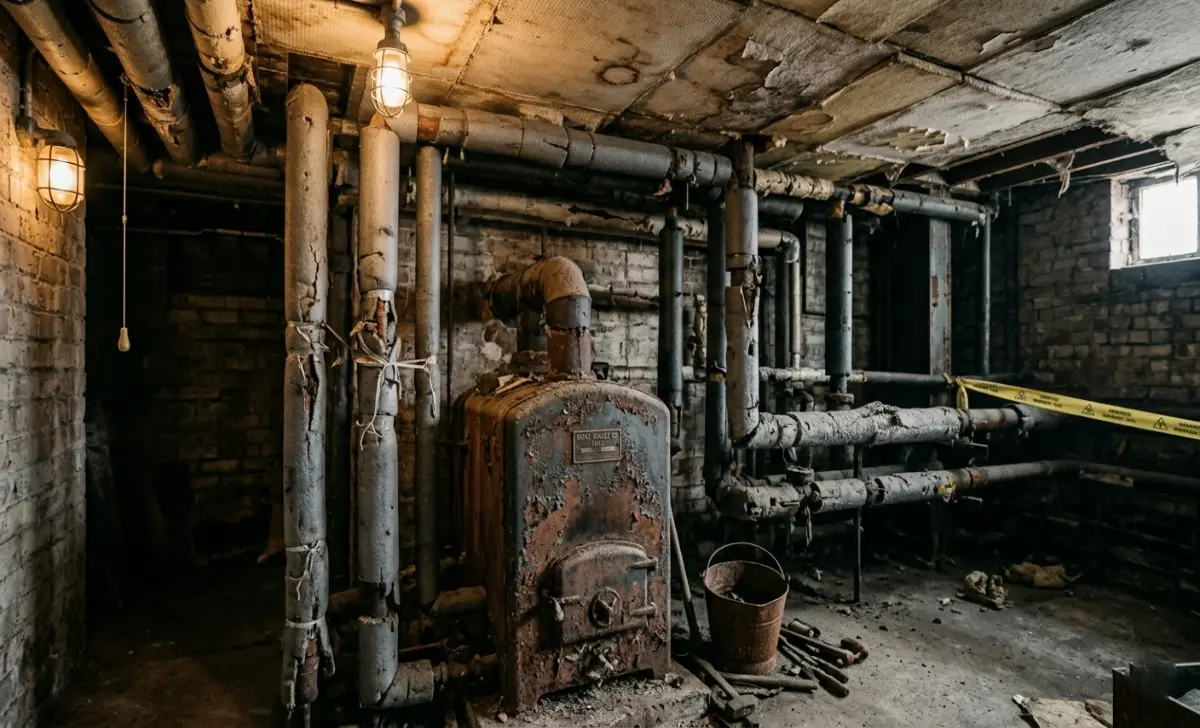
Homes and apartment blocks built before 1980 — and in some regions, before the early 1990s — are the most common setting for asbestlint. Specific locations include:
- Pipe lagging and insulation around boilers
- Artex and textured ceiling coatings
- Vinyl and linoleum floor tiles, particularly 9×9-inch tiles common in the US
- Roofing felt and corrugated roof sheets
- Insulation boards around fireplaces and behind electrical panels
- Soffit boards and external wall cladding (common in garage roofs)
The critical point: if the material is intact and undisturbed, the risk is relatively low. The danger begins when it is drilled into, sanded, cut, broken, or allowed to degrade without management.
Industrial and Commercial Sites
Factories, power stations, shipyards, and manufacturing plants present a higher density of asbestlint materials. Industrial insulation was used extensively on machinery, boilers, and pipe networks that ran hot for extended hours. Older office and commercial buildings may contain asbestlint in suspended ceilings, insulation boards, and floor tiles.
Vehicles and Transport Infrastructure
Asbestos was historically used in vehicle brake pads, gaskets, and clutch linings. Mechanics working on older vehicles — particularly those built before the 1990s — can disturb asbestlint during routine maintenance. Some railway infrastructure also contains asbestos-based materials in older carriages and station buildings.
Health Risks of Asbestlint Exposure
Why the Latency Period Makes It So Dangerous
The most dangerous characteristic of asbestlint is one that makes it easy to underestimate: the diseases it causes do not appear for years — often decades — after the original exposure. The typical latency period for asbestos-related disease is 10 to 40 years. A person exposed during building work in 1985 may not receive a diagnosis until 2025 or later.
This happens because asbestos fibres, once inhaled, lodge deep in the lung tissue. The body cannot break them down. Instead, it attempts to wall them off — triggering chronic inflammation, scarring, and, over time, cellular changes that can lead to cancer.
The confirmed diseases linked to asbestlint exposure are:
- Asbestosis — Chronic scarring of lung tissue. Progressive, incurable, and debilitating. Causes shortness of breath, persistent dry cough, and reduced lung capacity.
- Mesothelioma — A rare but aggressive cancer affecting the lining of the lungs, abdomen, or heart. Exclusively linked to asbestos exposure. Prognosis is typically poor due to late-stage diagnosis.
- Lung cancer — Risk is significantly elevated by asbestos exposure, and is compounded dramatically in people who also smoke.
- Pleural disorders — Including pleural thickening and pleural plaques, which can restrict breathing and cause chest pain.
The World Health Organisation classifies asbestos as a Group 1 carcinogen — the highest classification of confirmed cancer risk in humans. The EPA states there is no confirmed safe level of asbestos exposure.
Secondary Exposure — The Overlooked Risk
One risk that most articles skip over entirely is secondary exposure. Workers who handled DIY Interior Stucco — factory workers, shipyard labourers, construction tradespeople — could carry asbestos fibres home on their clothing, hair, and skin. Family members, including children, were then exposed without ever setting foot in a hazardous workplace. This pathway of exposure has been confirmed in published epidemiological studies and is the reason why some mesothelioma diagnoses occur in people with no direct occupational history of asbestos contact.
Fibre Type Matters: Chrysotile vs Amphibole
Not all asbestos is identical in its risk profile. The two main categories are:
- Chrysotile (white asbestos) — The most commonly used type, accounting for the majority of global asbestos production. Its fibres are curly and slightly more soluble in lung tissue, which — while still hazardous — some researchers suggest may carry a marginally different disease profile than amphibole.
- Amphibole asbestos (including amosite/brown and crocidolite/blue) — Straight, needle-like fibres considered more persistent and more strongly associated with mesothelioma. Both blue and brown asbestos were banned in the UK in 1969.
If you are having a building professionally tested, the laboratory report should identify which fibre type is present. Crocidolite and amosite findings typically call for a more urgent response than chrysotile alone.
How to Identify Asbestlint in Your Property
Visual Warning Signs
Asbestlint cannot be reliably identified by sight alone. However, certain visual indicators should prompt professional testing before any work begins:
- The building was constructed or last renovated before 1985
- Pipe lagging that appears grey, white, or off-white, especially if crumbling or fraying
- Ceiling or wall materials with a textured, pebbled surface
- 9×9-inch or 12×12-inch floor tiles with a dull, chalky appearance
- Corrugated roofing on garages or outbuildings
- Crumbling insulation material around heating systems
- Dusty residue or fine pale fibres around boilers, ducts, or pipes
If any of these are present in a pre-1985 structure, treat them as potentially asbestos-containing until proven otherwise.
Professional Testing Methods
Accredited professionals use several methods to confirm Asbestlint presence and fibre type:
| Method | What It Does | Best Used For |
|---|---|---|
| Polarised Light Microscopy (PLM) | Identifies asbestos minerals in bulk material samples | Solid material samples (tiles, insulation) |
| Phase Contrast Microscopy (PCM) | Counts airborne fibers per cubic centimetre | Air quality monitoring during/after work |
| Transmission Electron Microscopy (TEM) | Highest resolution — detects ultra-fine fibres | Clearance testing and dispute cases |
| X-ray Diffraction (XRD) | Identifies crystalline mineral structure | Lab confirmation of fibre type |
Air testing using PCM or TEM is the only reliable method to determine whether Asbestlint is present at dangerous concentrations in an indoor environment. The testing cost typically ranges from approximately $200 to $800, depending on the number of samples and the laboratory used.
Encapsulation vs Full Removal — Which Is Right for You?
One of the most important decisions in Asbestlint management — and one most competitor articles ignore entirely — is whether to remove asbestos-containing material or encapsulate it. Both are legitimate approaches, and the right choice depends on the specific situation.
| Factor | Encapsulation | Full Removal |
|---|---|---|
| How it works | Seals fibres inside a coating or casing, preventing release | Physically extracts all asbestos-containing material |
| Risk during the process | Lower — fibres are not disturbed | Higher removal creates fibre release risk |
| Best for | Intact, stable, low-traffic areas | Damaged material, high-traffic areas, pre-demolition |
| Cost | Generally lower | Generally higher |
| Long-term | Requires ongoing monitoring | Eliminates material permanently |
| Legal requirement | Acceptable under most regulations if properly documented | Required in many regions before demolition |
The phrase “always remove asbestos” is an oversimplification. Intact asbestlint that is well-sealed and not subject to physical disturbance may be safer left in place under a formal Asbestos Management Plan than disturbed through poorly executed removal. The decision should always be made by a certified inspector, not a homeowner acting independently.
Safe Removal: What the Process Actually Involves
Pre-Renovation Checklist
Before any drilling, cutting, or demolition work in a pre-1985 building, run through this checklist:
- [ ] Has the building been professionally surveyed for asbestos-containing materials?
- [ ] Are laboratory test results available for the specific materials being worked on?
- [ ] Have contractors been informed and asked about their asbestos handling credentials?
- [ ] Has the relevant area been visually assessed for damage, crumbling, or fibre release?
- [ ] Is there a containment plan in place if asbestos is confirmed?
- [ ] Has local authority notification been made if required by regional law?
Skipping this process is where the majority of accidental asbestlint exposure events begin.
What Certified Abatement Looks Like Step by Step
When certified asbestos abatement professionals manage Asbestlint removal, the process generally follows these stages:
- Initial survey and risk classification — The inspector surveys the area, collects samples, and assesses the condition and type of material.
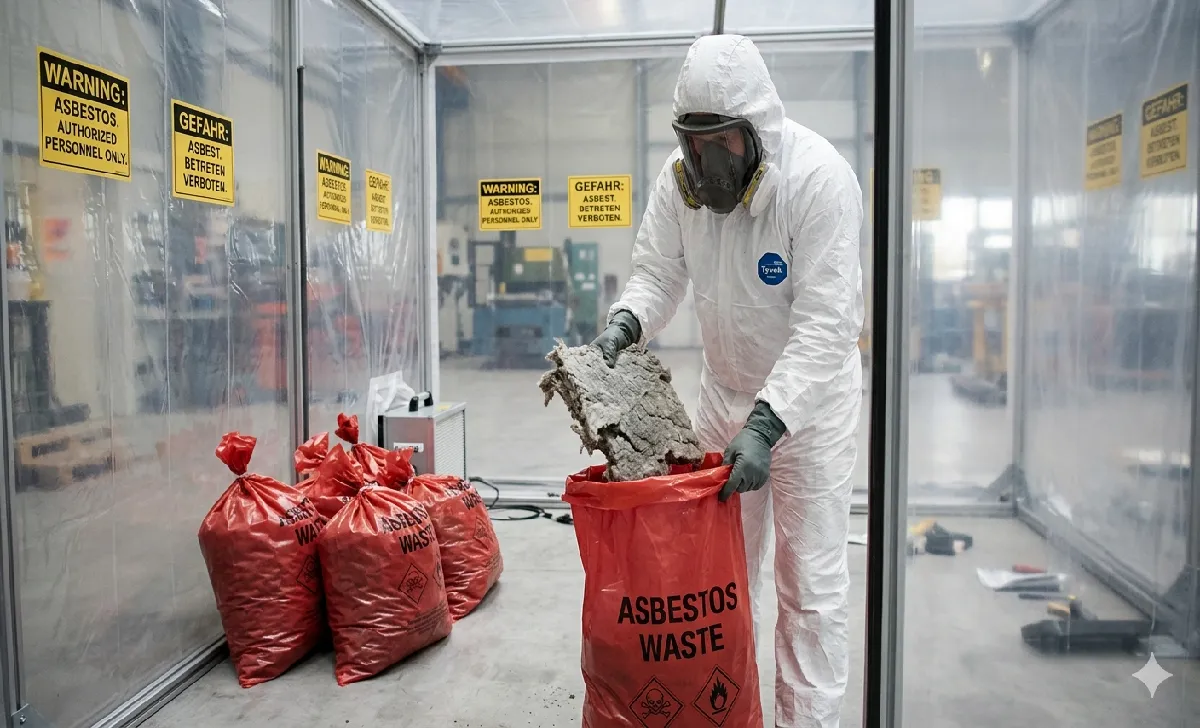
- Area preparation and containment — Affected zones are sealed using polyethene sheeting and negative air pressure units to prevent fibres from escaping.
- PPE setup — Workers use P3 or N100 respirators with asbestos-rated filters, full disposable coveralls, gloves, and boot covers.
- Wet suppression — Materials are dampened before handling to prevent fibres from becoming airborne during removal.
- Careful extraction — Asbestlint is removed in manageable sections. It is not vacuumed with standard equipment — only HEPA-filtered industrial vacuums rated for asbestos removal are used.
- Bagging and labelling — All removed material is double-bagged in sealed, clearly labelled hazardous waste bags.
- Clearance air testing — Post-removal air samples are taken using TEM or PCM methods to confirm fibre concentrations are within safe limits before the area is returned to use.
- Licensed disposal — Material is transported to a licensed hazardous waste facility. Casual disposal in standard bins is both dangerous and illegal in most countries.
A standard household removal involving one or two locations typically takes one to two days and should include a post-removal clearance certificate from the contractor.
Regulations and Legal Duties (As of 2026)
Key Rules in the US, UK, and EU
United States: The EPA and OSHA jointly regulate asbestos exposure. OSHA’s permissible exposure limit for asbestos is 0.1 fibres per cubic centimetre of air over 8 hours. Any renovation or demolition in a building suspected of containing asbestos-containing materials requires an asbestos inspection prior to work beginning. Licensed contractors must be used for removal beyond small quantities. Improper handling or disposal can result in criminal penalties.
United Kingdom: The Control of Asbestos Regulations 2012 (CAR 2012) govern all asbestos-related work in the UK. Under these regulations, non-licensed work is permitted only for limited, low-risk activities. Licensed contractor work is mandatory for higher-risk removal, including work on asbestos insulation, asbestos insulating board, and loose-fill asbestos. The duty to manage asbestos applies to all non-domestic premises.
European Union: The EU Worker Protection Directive 2009/148/EC sets a binding occupational exposure limit of 0.1 fibres per cubic centimetre. EU member states are required to maintain national asbestos registers and ensure proper notification before demolition or renovation work involving asbestos begins.
Property owners, employers, and building managers all carry legal duties in these frameworks. Failing to disclose known asbestos presence to contractors or allowing untrained workers to disturb Asbestlint, can result in enforcement action, financial penalties, and civil liability.
Common Myths About Asbestlint — Corrected
Myth: “A little dust from old insulation won’t cause any real harm.” There is no confirmed safe exposure threshold for asbestos fibres. Even low-level, intermittent exposure carries an elevated disease risk over time. The EPA’s position is clear: no level of asbestos exposure can be considered safe.
Myth: “If asbestos is in my building, I have to remove it immediately.” This is incorrect. Intact, undisturbed asbestos that is in good condition and not subject to physical disturbance can often be safely managed in place under a formal Asbestos Management Plan. Unnecessary removal can actually increase risk if done incorrectly.
Myth: “I can vacuum up Asbestlint safely with a good household vacuum.” Standard vacuum cleaners — including most models marketed as high-performance — do not capture fibres at the microscopic scale of asbestlint. They recirculate them back into the air, worsening contamination. Only industrial HEPA vacuums rated for asbestos work are appropriate.
Myth: “Asbestos was completely banned years ago, so new buildings are safe.” Asbestos is banned in over 55 countries, but many nations continue to mine, manufacture, and use it in construction materials as of 2026. In countries where the ban is in place, buildings constructed or renovated using imported materials warrant scrutiny. The ban on use does not retroactively remove Asbestlint already installed in older structures.
Myth: “Asbestlint only affects construction workers.” Secondary exposure through contaminated clothing and household dust has caused asbestos-related diseases in family members of workers who were never directly exposed on-site. Schoolchildren in buildings with damaged asbestos insulation have also been identified as an at-risk group in public health studies.
FAQs
Is asbestlint dangerous if it is not disturbed?
If asbestlint — in the form of asbestos-containing material — is intact, stable, and not subject to physical disturbance, the immediate health risk is relatively low. The danger arises when the material is cut, drilled, broken, aged to the point of crumbling, or disrupted during renovation or maintenance work. Intact material should be documented, monitored regularly, and managed under a formal plan rather than assumed to be harmless in perpetuity.
Can I remove asbestlint myself?
In some regions, homeowners are permitted to remove small quantities of certain asbestos-containing materials themselves. However, this carries a significant health risk and is strongly discouraged. For any material that is damaged, friable, or present in large quantities, certified abatement professionals must be used. Attempting DIY removal without proper containment, PPE, and disposal procedures can spread fibres throughout a building and create a far larger contamination problem than the original material. Check local regulations before proceeding with any asbestos-related work.
How long do asbestos fibres stay in the air?
Asbestos fibres are extremely lightweight. In still indoor air, they can remain airborne for several hours after being released. In spaces with active airflow — from HVAC systems, open windows, or foot traffic — fibres can travel significant distances from the original disturbance point and settle on surfaces across multiple rooms. This is why containment during removal is critical, and why clearance air testing after abatement is a professional obligation rather than an optional extra.
How much does professional asbestlint inspection and removal cost?
Inspection and sampling typically costs between $200 and $800, depending on the property size and the number of samples collected. Full removal costs vary considerably based on the volume of material, its location, and the complexity of access. A small domestic removal — such as asbestos tape around a single boiler — may cost between $500 and $2,000. Larger projects in commercial buildings can run to tens of thousands. Some regional governments and housing authorities offer grants or subsidies for asbestos testing and removal in older residential properties — worth checking with your local authority.