





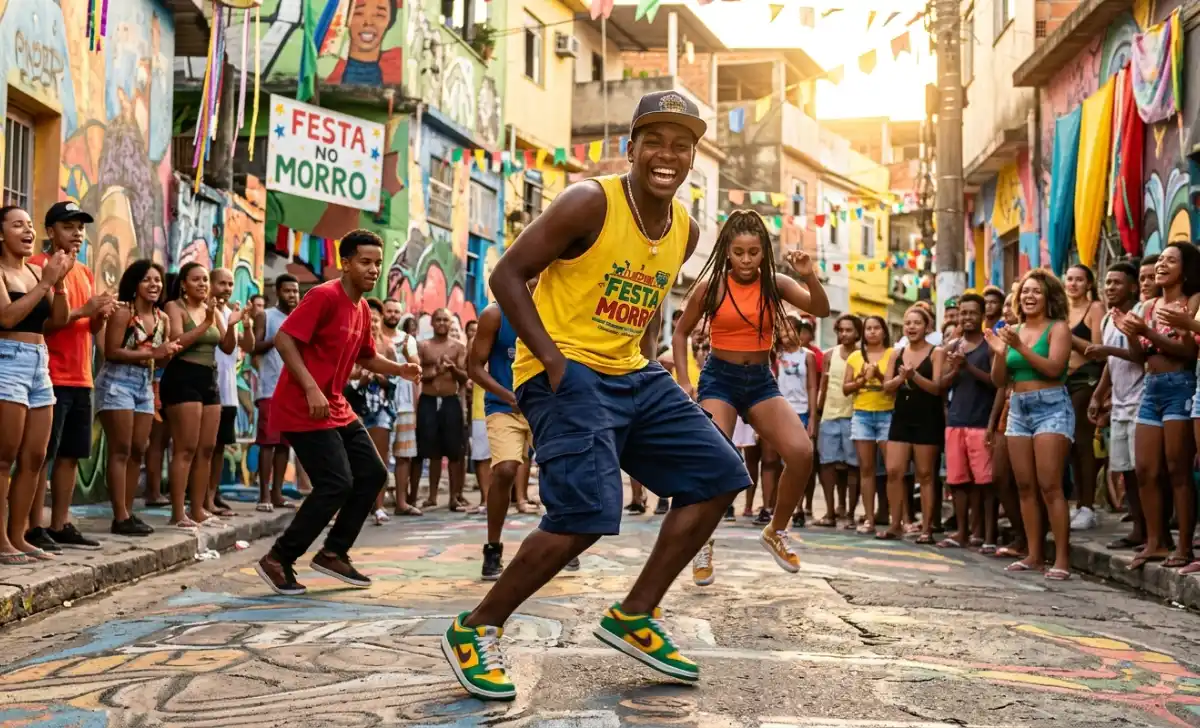
It’s 11 PM. You’re scrolling TikTok, half-asleep, and suddenly your entire feed is the same thing — fast, bouncy footwork, a bass-heavy beat, and people moving like the floor is hot. You watch three videos before you realise you have no idea what you’re looking at. The caption says #Dubolsinho. You search it. Now you’re down a rabbit hole.
If that sounds familiar, you’re in good company. Dubolsinho has been one of the most-searched dance trends of 2026, and — honestly? — most of what’s online about it is either too vague or covers only one piece of the story. Some articles call it a game. Others say it’s a folk dance. A few just post the TikTok compilations without any explanation.
By the end of this, you’ll know exactly what Dubolsinho is, where it came from, what the name actually means, and — yes — how to do it yourself. No dance experience required.
What Is Dubolsinho — and Why Is Everyone Talking About It?
More Than Just a Dance Trend
Dubolsinho is a Brazilian street dance style rooted in funk carioca music — the bass-heavy, fast-paced genre that came out of Rio de Janeiro’s favelas in the late 1990s. At its core, it’s freestyle. There’s no fixed routine, no mirror-image partner choreography, no stage. Just a beat, a body, and a set of signature moves built around fast footwork and a distinctive arm position near the hips.
But here’s the thing: Dubolsinho is also more than one thing. Depending on who you ask in Brazil, it might refer to a backyard game, a traditional folk dance tied to Bahian festivals, or — in 2026 — the TikTok challenge racking up billions of views. This article is going to connect all of those dots, because understanding the full picture is what makes Dubolsinho genuinely fascinating rather than just another fleeting trend.
Where Did Dubolsinho Come From? The Origin Story
Roots in the Favelas of Rio and São Paulo
Dubolsinho’s modern form took shape in the late 1990s and early 2000s in the urban communities of Rio de Janeiro and São Paulo — specifically in the baile funk scene, the street parties that gave funk carioca its heartbeat. These weren’t concert venues. They were community events in neighbourhoods with little money and a lot of creativity. People danced in the streets, in courtyards, in between apartment blocks.
What made Dubolsinho distinct was its accessibility. You didn’t need formal training. You didn’t need a partner. You didn’t need expensive clothes or a studio. You needed rhythm, space, and the willingness to move. That low barrier to entry is part of why it spread so fast through working-class communities — and why it still has that same approachable energy today, whether you’re in a Rio favela or a living room in Ohio.
A Community-First Art Form
Brazilian street dance has always been tied to social expression. Think about samba — born from African rhythms and marginalised communities, then adopted by the whole country. Capoeira — a martial art disguised as dance, created by enslaved Africans as a tool for survival. Dubolsinho follows that tradition. It emerged from communities that used dance as celebration, identity, and belonging.
The funk carioca scene where Dubolsinho grew was also culturally hybrid from the start — pulling from hip-hop that had crossed the Atlantic from the United States, mixing it with samba-like lower-body movement and improvised footwork patterns. So when Americans watch Dubolsinho on TikTok and feel something familiar in it, that’s not an accident. The dance was already absorbing American hip-hop influence decades ago.
What Does the Name “Dubolsinho” Actually Mean?
Good question. The name is a Portuguese portmanteau — a mashup of two words. “Du” is a shortened form of “dois,” meaning “two.” “Bolsinho” means “little pocket.” Put them together, and you get something close to “two little pockets” — which is a direct reference to the dance’s most recognisable move: both hands positioned near the hip pockets, thumbs tucked in, as the dancer bounces and works their footwork around that fixed upper-body anchor.
It’s a small detail that reveals a lot. The name isn’t poetic or abstract — it describes exactly what you see. And that visual specificity is part of what made Dubolsinho so shareable online. When you can look at a move and immediately understand why it’s named what it’s named, the dance becomes easier to teach, easier to mimic, and easier to hashtag.
This naming pattern — where a term is descriptive enough to carry its own meaning — is something you see across internet culture more broadly. If you’re curious how other viral terms get their names and why some stick while others disappear overnight, this breakdown of how internet naming works is worth a read.
Why Did Dubolsinho Go Viral on TikTok in 2026?
The Perfect Formula for Social Media Algorithms
Not every dance goes viral. The ones that do tend to share the same DNA: a short, repeatable motion, a specific piece of audio that gets attached to it, and a visual hook visible in the first two seconds of a video. Dubolsinho hits all three. The “pocket” arm position is immediately distinctive in the thumbnail. The footwork is fast enough to look impressive but slow enough to be learnable. And Brazilian funk music — the audio that drives it — has been building global momentum for years.
Stay with me here, because the music angle matters. Brazilian funk BPM sits right in the sweet spot for dance content — typically around 130 BPM, which is energetic without being frenetic. That tempo makes cuts feel exciting in short-form video without needing any editing tricks. The algorithm rewards retention, and Dubolsinho clips are the kind you watch twice.
Three factors explain the 2026 explosion in particular:
- Algorithm tailwind: TikTok’s For You page began surfacing Brazilian funk audio to non-Brazilian audiences at scale in late 2025, creating a ready pipeline for Dubolsinho content to travel globally.
- Music momentum: Funk carioca had already found mainstream crossover in Europe and parts of the United States through artists blending it with Afrobeats and reggaeton. Dubolsinho rode that wave.
- Challenge replicability: The #Dubolsinho challenge format was simple enough that anyone — skilled dancer or total beginner — could post a version. That inclusivity drove participation, which drove views, which drove more participation.
Celebrity and Influencer Amplification
No viral trend survives on algorithm alone. Dubolsinho got its rocket fuel when a cluster of high-follower creators — both Brazilian and international — posted versions within the same two-week window in early 2026. Once the #Dubolsinho hashtag hit critical mass, it became self-sustaining. Creators posting reaction videos, tutorials, and remix versions kept feeding the cycle. At last count, the hashtag had crossed several billion views across platforms.
Dubolsinho isn’t the only term that’s gone through this cycle — where a niche community word suddenly lands in front of a global audience through creator amplification. This look at another emerging internet term shows just how consistent that pattern is across different cultural starting points.
How to Do the Dubolsinho Dance: A Beginner’s Step-by-Step Guide
Here’s the part you’ve been waiting for. The good news is that Dubolsinho is genuinely learnable for a complete beginner. You don’t need dance training. You just need a clear space, some Brazilian funk playing, and patience for the first ten minutes.
Step 1: Get Your Stance Right
- Stand with your feet shoulder-width apart. Your weight should be evenly distributed.
- Bend your knees slightly — not a squat, just a soft bend. This is what creates the signature bounce and makes everything else flow. If your knees are locked, you’ll look stiff no matter what your feet do.
- Relax your shoulders. Drop them away from your ears. The upper body in Dubolsinho is controlled but not tense.
Step 2: Master the Signature “Pocket” Arm Move
- Bring both hands toward your hips, thumbs tucked near the top of your front pockets. Your elbows should point slightly outward, not glued to your sides.
- Keep this position as your baseline. Your arms won’t be waving around — that’s the whole point. The stillness of the “pocket” position makes your footwork look even faster by contrast.
- Practice holding the pocket position while gently bouncing in place with your bent knees. Get comfortable with the arms before adding feet.
Step 3: Add the Footwork
- Start with a basic shuffle: step your right foot out to the right, then bring your left foot to meet it. Then step left, bring right foot to meet. Do this in time with the beat, keeping your knees bent.
- Once that feels natural, add a quick tap: step right, tap left foot next to right (don’t put full weight on it), then step left, tap right. This tap is what starts to create the bouncy, flickering footwork Dubolsinho is known for.
- As you get more comfortable, start playing with the rhythm — let the taps come slightly early or late. The dance rewards those who listen to the music rather than counting in their head.
Step 4: Freestyle and Have Fun
Now put it all together: pocket arms, bent-knee bounce, shuffle footwork. Loop it. Once the basics feel automatic — maybe after 15 minutes of practice — start experimenting. Turn slightly as you shuffle. Add a hip dip. Speed up for two beats, then slow down. Dubolsinho has no fixed choreography, which means you can’t do it “wrong” once you’ve got the fundamentals. That’s the whole spirit of it.
What Music Works Best for Dubolsinho?
The music is not optional. Dubolsinho without funk carioca is like salsa without percussion — technically possible, but it misses the entire point. The music is what makes the dance feel alive, and your body will naturally pick up the footwork pattern once the right beat is playing.
Here’s what to look for and listen to:
- Brazilian Funk / Funk Carioca: The original and best fit. Search Spotify or YouTube for “Funk Carioca playlist” or “Baile Funk Mix 2025.” The BPM range you want is roughly 128–135 — fast enough to feel energetic, slow enough to track the beat.
- Phonk-Funk Fusion: A newer subgenre blending Brazilian funk with dark, Memphis-influenced phonk. If you’ve heard heavy 808s under fast-rolling hi-hats on TikTok, this is the sound. Works perfectly for Dubolsinho’s footwork patterns.
- Brazilian Funk + Afrobeats crossover tracks: Several artists — many based in São Paulo and the UK — are blending funk carioca with Afrobeats rhythms. These tracks tend to sit around 120–128 BPM and have a slightly more melodic quality. Great for beginners because the rhythm is slightly easier to track.
A practical tip: when you’re practising the steps from Section 5, put on a Funk Carioca playlist from the start. Don’t try to learn the moves in silence and add music later. The music changes how your body responds, and that change is the whole point.
Is Dubolsinho Just a Trend — or Does It Have Real Cultural Significance?
Street Dance as Cultural Expression
Here’s an honest answer: it’s both, and the two aren’t in conflict. Yes, Dubolsinho is trending on TikTok in 2026. It’s also a genuine cultural form with two decades of community history behind it. Street dances in Brazil have always functioned this way — they start as local expressions of identity in working-class and marginalised communities, then travel outward as Brazilian culture spreads.
Samba didn’t start as a tourist attraction. Capoeira wasn’t invented for YouTube. Both began as survival tools — ways for displaced African communities in Brazil to maintain culture under oppression — and then grew into global art forms. Dubolsinho is following a similar path, just compressed by the speed of the internet. Carnival celebrations and local festivals like the Night of Lights in Brazil’s interior have incorporated Dubolsinho footwork into their street parties, with traditional instruments like the berimbau and pandeiro now sometimes heard alongside funk carioca beats. That blending is not dilution — it’s how Brazilian culture has always worked.
Connecting Tradition with the Digital Age
What makes 2026’s Dubolsinho moment different from earlier Brazilian dance exports is the direction of the conversation. When samba became globally popular in the 20th century, Brazilian communities often lost control of its narrative. This time, Brazilian creators are leading the TikTok trend themselves. They’re the ones with the most-viewed tutorials, the most-shared remixes, and the most active presence in the #Dubolsinho hashtag. That matters.
And for the non-Brazilian audience engaging with it — people in the USA, UK, and everywhere else who picked it up on TikTok — there’s a genuine opportunity here. Not just to learn a cool move, but to follow that move back to its source. The table below shows where Dubolsinho sits relative to other major Brazilian dance traditions:
That shift — where a cultural experience moves from a physical community into a global digital space without losing its core identity — is something this piece on how experiences are being redefined online explores in a different but relevant context. Worth reading alongside this one.
Final Thoughts
Dubolsinho is one of those things that looks like a TikTok moment on the surface but has a real story underneath it. It came from Brazilian funk communities, carries two decades of street culture behind it, got its name from a specific arm position near the hips, and landed on the global stage because it’s genuinely fun to do and watch.
Before you go, here’s the short version:
- Dubolsinho is a Brazilian street dance rooted in funk carioca music, originating in Rio de Janeiro and São Paulo’s favelas in the late 1990s.
- The name comes from the Portuguese for “two little pockets” — a direct description of the signature arm position.
- It went viral in 2026 through a combination of algorithm timing, rising global interest in Brazilian funk, and a challenge format accessible to all skill levels.
- You can learn the basics in under 30 minutes: bent knees, pocket arms, shuffle footwork — and then freestyle from there.
- Dubolsinho is not “just” a TikTok trend — it has genuine cultural roots, and engaging with it honestly means understanding where it came from.
You don’t need to be a dancer. You just need a beat and a willingness to move. Put on a Funk Carioca playlist, find some open floor, and give it 15 minutes. That’s all it takes to go from watching to doing.
Have you tried the Dubolsinho challenge yet? Drop your experience in the comments, or share this with a friend who needs to learn the steps.